
This text was originally written for Datatopia, as part of Projekt Bauhaus Werkstatt at the Floating University in Berlin in 2018.
—
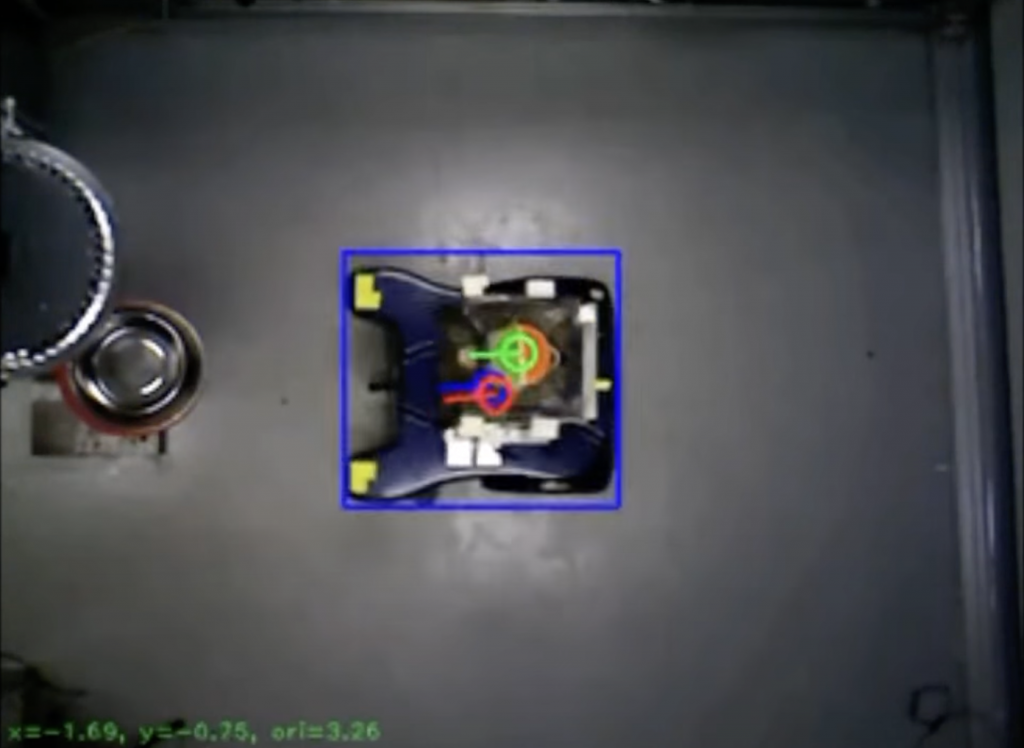
In 2016, researchers implanted a ‘Wireless Cortical Brain-Machine Interface‘ in to the head of a macaque monkey which enabled it to learn to control an electric cart, steering itself around a lab environment to collect grapes.
This experiment raises many questions about ethics, our relationship to non-human intelligence and neuroplasticity, but the most revealing might be: why did they teach the monkey to drive?
The researchers point at the potential to one day help those with mobility and health issues but such experiments are also laying the ground work for a new type of relationship with the city, driven by simultaneous developments across neuroscience, AI, vehicular automation and the pervasively emerging models of data-hungry urban management that imagine the car as the foundational unit of city data.
Drive Time
As software agents become impressively responsive to both interactions with us and with each other, we now encounter their predictive and prescriptive influence throughout the minutiae of our everyday lives and the texture of our critical, global infrastructures. Meanwhile governance is intertwining itself with the prognostic accuracy of it’s digital sensory apparatuses – from image recognition embedded into traffic cameras to predictive policing – and our cities appear to be highly absorbent to various modes of sense data collection. As machine learning begins to hallucinate it’s first wonky attempts to organise urban data, we observe an emergent, cognitive flavour of the platform, rife with unaccountable discriminations and fixated on near-instant forecasting.
Uncertainty still prevails – how do we access or adjust their hidden stochastic definitions and against who’s baseline are these platform technics configured? Most crucially for our cities, what are the consequences of over-eagerly ascribing ‘intelligence’ and transferring agency to systems whose attention spans operate in microseconds rather than decades? How might we legally or politically separate the rapid advances of sense-making capacity from the governmental or corporate structures they may feed into, and distinguish urban observation from the temptations of impossibly idealised, autonomic self-regulation that may entrench socially and ecologically flawed urban design patterns. A platform urbanism disinterested in the wider precepts of intelligence and human cognition, that miscalculates the centrality of our plastic memories and language, risks promoting maladjusted computational hierarchies.
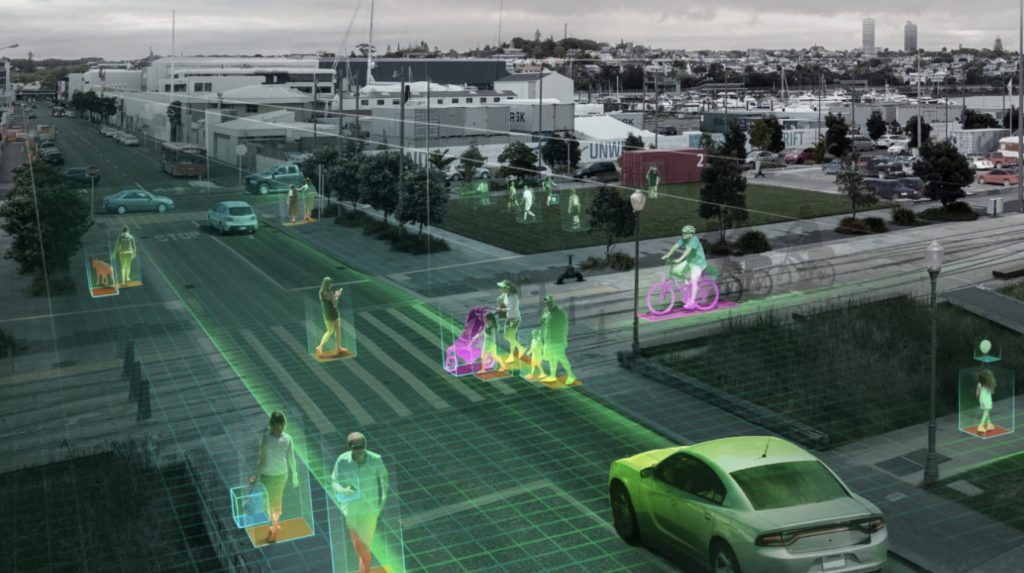
Finally if there can be no opt-out from such platform sensing, so too can there be no neutral visibility – our appearance to and actions within such systems continually and functionally reorders them. The active rebalancing of the accidentally or uncritically emergent properties of urban scales organisations, potentially coercive by default, becomes a key site of political negotiation. Can we nurture a new sense calibration as a participatory action, anticipating the need for regular counter-active involvement within algorithmic mechanics that neither outright rejects their usefulness nor considers specific regimes of data, addressability or temporal perception as inevitable.

A feature of recent public discourse about machine or artificial intelligence is the blurring of numerous distinct research developments and potential products into something more akin to an all purpose tool. Breakthroughs made in the search for a generalised artificial intelligence, by prominent actors such as Google’s DeepMind, can often appear conflated with it’s full arrival. Sustained by PR departments and clumsy editorial writers, machine learning is frequently presented as some sort of alchemical glue enabling frictionless transfer of computation and inhuman foresight when the discipline is still remarkably focused on the improvement of separate and singular domains. The limits of a more narrowly focused approach within the research community are starting to come under increasing scrutiny1 – as the authors of the paper “Toward an Integration of Deep Learning and Neuroscience” observe:
“Brain science has discovered a dazzling array of brain areas, cell types, molecules, cellular states, and mechanisms for computation and information storage. Machine learning, in contrast, has largely focused on instantiations of a single principle: function optimization.”
… and concluding:
“Much of machine learning has focused on finding ever faster ways of doing end-to-end gradient descent in neural networks. Neuroscience may inform machine learning at multiple levels. The optimization algorithms in the brain have undergone a couple of hundred million years of evolution… …The specialized structures evolved in the brain may inform us about ways of making learning efficient in a world that requires a broad range of computational problems to be solved over multiple timescales.”
Higher level neuro-mimicry within the architectures of machine learning frameworks will likely play an increasingly important role, as founder of DeepMind Demis Hassabis, et al. contend in Neuroscience-Inspired Artificial Intelligence, a wide-ranging paper summarising the current direction of research towards an expanded approach:
“The benefits to developing AI of closely examining biological intelligence are two-fold. First, neuroscience provides a rich source of inspiration for new types of algorithms and architectures, independent of and complementary to the mathematical and logic-based methods and ideas that have largelydominated traditional approaches to AI. … Second, neuroscience can provide validation of AI techniques that already exist.“
The authors describe the increased focus on operationalizing concepts such as cognitive ‘attention’, episodic memory and continual learning that require far higher degrees of structural sophistication, and articulate a roadmap toward architectures that are less easy to formulate in terms of current software engineering.
With massive investment continuing to pour into research we could expect progress in this vein to be smooth. However putting less emphasis on the long understood computational power and somewhat magic allure of neural networks, we might conservatively frame the practical reality of artificial intelligence in practice as the application of a series of high performance statistical data analysis tools, dependent on well organised data, often in huge quantities and running on radically cheaper and increasingly powerful GPU’s. Even if the direction of travel is known,the assimilation of deeper neural complexities into this software paradigm may represent a more consequential bottleneck.
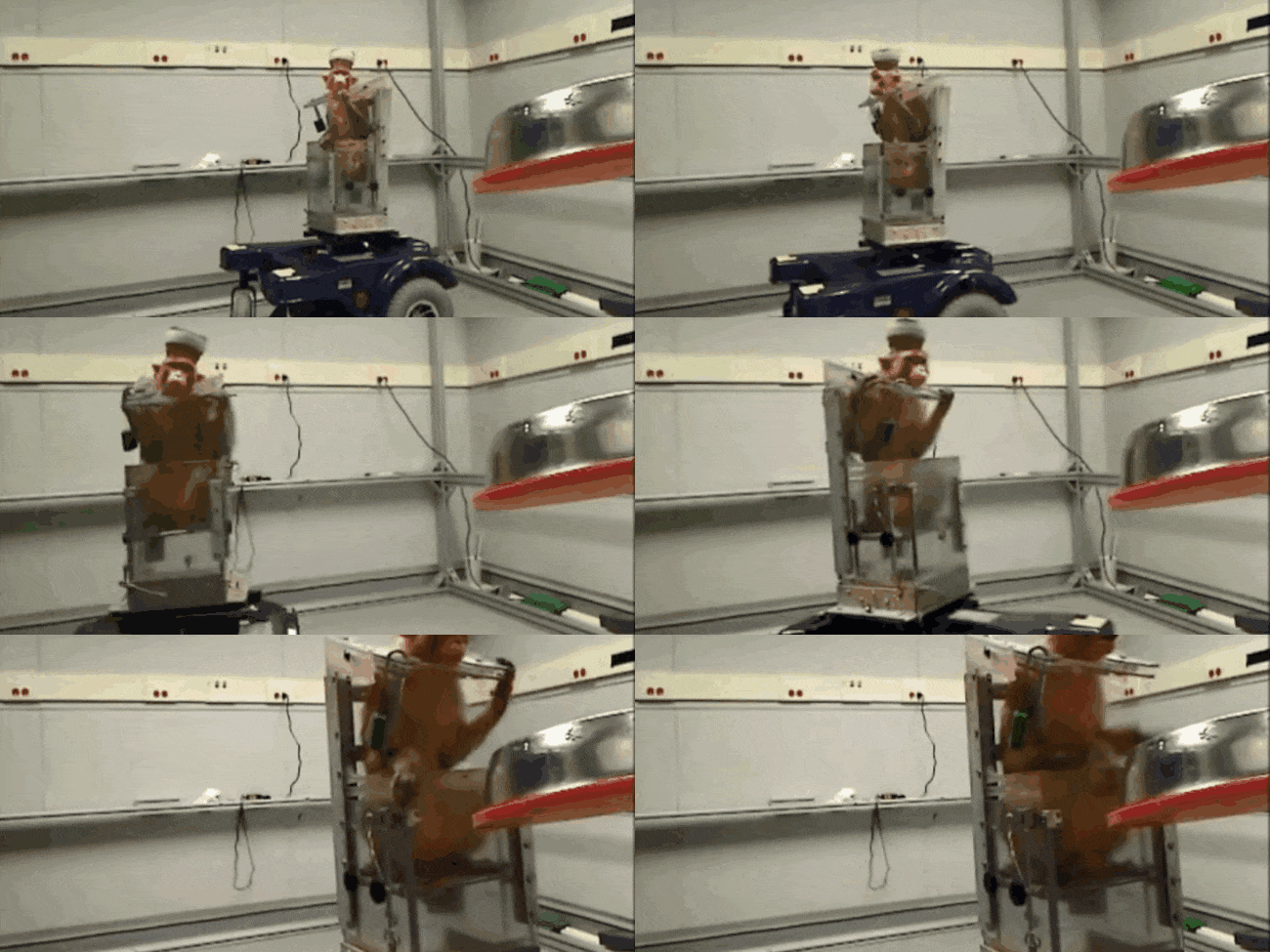
Wireless Cortical Brain-Machine Interface for Whole-Body Navigation in Primates
Rajangam, S., Tseng, PH., Yin, A. et al. Wireless Cortical Brain-Machine Interface for Whole-Body Navigation in Primates. Sci Rep 6, 22170 (2016). https://doi.org/10.1038/srep22170
Meanwhile, machine learning potential has lent a credibility to the uncomfortable feasibility of the utopia of the “smart”, with it’s longing for homeostasis and order, dependent less on political bravado (or indeed fascist rhetoric), but enormous and excitable multinational capital and meshed sensors. While the ‘Internet of Things’ has perhaps proved less transformative than many speculated, we are witnessing it’s logic revitalized with the added promise of seemingly unstoppable predictive machine insight. At the scale of the urban, the compulsion towards adopting such technology presents itself as a seemingly apolitical sleight-of-hand through which techno-capitalism conjures faster transport and safer streets. The basic thrust of the agenda has long been towards some previously unimaginable efficiency gain through the sheer scale of data collection: network effects cast as business model moulded into urban plan. As arch-smart-city-critic Adam Greenfield notes, the original conception of the Smart City began as a series specific developments, before morphing gradually in to an general model pushed by a handful of major tech corporations to become:
“[a] far more consequential drive to retrofit networked information technologies into existing urban places. … We find the notion that a usefully synthetic awareness of urban processes can be garnered from sensing devices strewn throughout the built environment. … [w]e find proposals to mount sensors in the dumpsters, cameras on the lampposts, RFID readers in the subway and load cells in the pavement… …[w]e find the collection and analysis of data enshrined at the heart of someone’s conception of municipal stewardship.”
While many of his criticisms this agenda hold up, the generic, the worldwide roll-out has been met with surprisingly little friction. Siemens, Cisco, IBM et al. appear to be doing good business at the municipal level, potentially locking cities into long-term service provision agreements or rigid city information models.
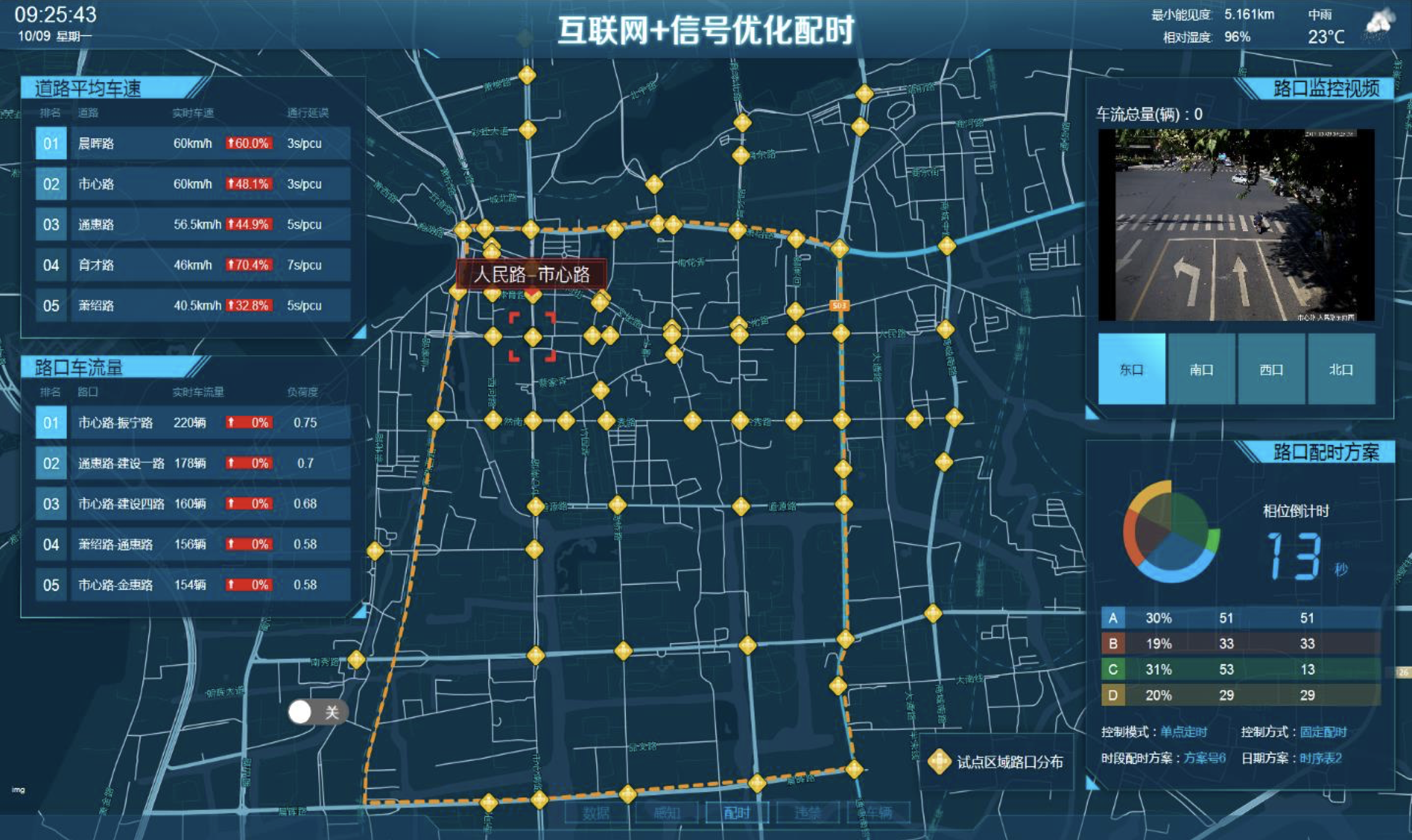
Although we may be entering a period of discovery as to the value of the earliest of these investments as they now begin to mature, with marketing engines still in top gear, the lure of ‘smartness’ sustains. Urban sensing and massive data collection continue to prove irresistible even if the discussion of the specific successes of smart infrastructure remain bounded almost entirely terms of efficiency or security. Consider The City Brain ™ platform developed by Alibaba for the Chinese city of Hangzhou in 2016 – one of the foremost examples of as more recent digital urban project staking a claim for intelligence.7 After being handed control 104 traffic light junctions8 the team at Alibaba Cloud developed a system that:
“City Brain improves government administrative capabilities by solving prominent problems that makes government more intelligent and responsible…. By incorporating traffic cameras with Alibaba’s Cloud’s ET City Brain solution… the average travel speed on roads with automated traffic signal control increased by 15%, reducing the average travel time by 3 minutes. The emergency vehicle response time was shortened by 50%, which allowed rescue vehicles to arrive 7 minutes faster.”
Alibaba’s efforts in Hangzhou are a particularly interesting case study because they largely dispenses with a wider variety of sensors and sharply focus on what has become the normative baseline of what city ‘smartness’ may really be – traffic management. Given the perceived dangers of hyper-congestion, as badly planned or legacy road networks fall into grid-lock, the municipal appeal of autonomous traffic systems may seem obvious. However it may also build on the reality that digitally manipulating a limited number of traffic lights and signals may be one of the few directly accessible non-human interfaces at municipal disposal. In addition, driving citizens paying careful attention to live navigation apps, are perhaps more receptive to explicit instruction than those involved in other activities. Traffic management may be the native app of lopsided urban sensing paradigms.
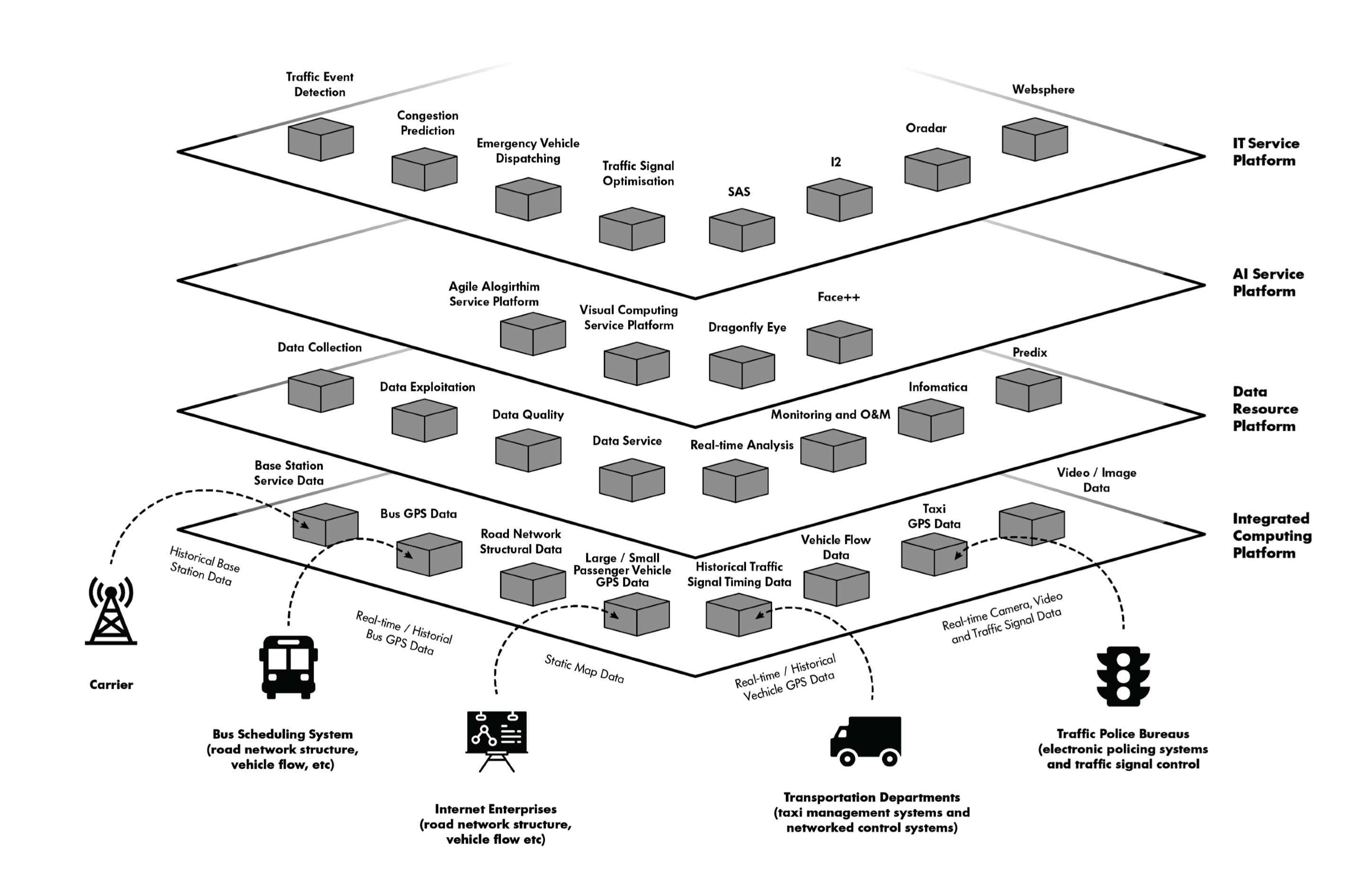
If the city determines itself to be a road network it’s ‘intelligence’ in this mode may ultimately be little more than packet prioritisation. We arrive at urban schemes that bias against the simple occupancy of public space as we build systems obsessed with optimising flow and exhibiting limited curiosity about the full range of human behavior that makes cities appealing. Further, given the widely known principle of ‘induced demand’, which tells us that building roads essentially increases traffic, how do we know that even dramatic optimizations are stable over longer periods of time if they seduce more drivers onto the road. Alibaba’s strategy is proving seductive, potentially being expanded to several other cities in China and throughout Asia, including a major installation in Kuala Lumpur.
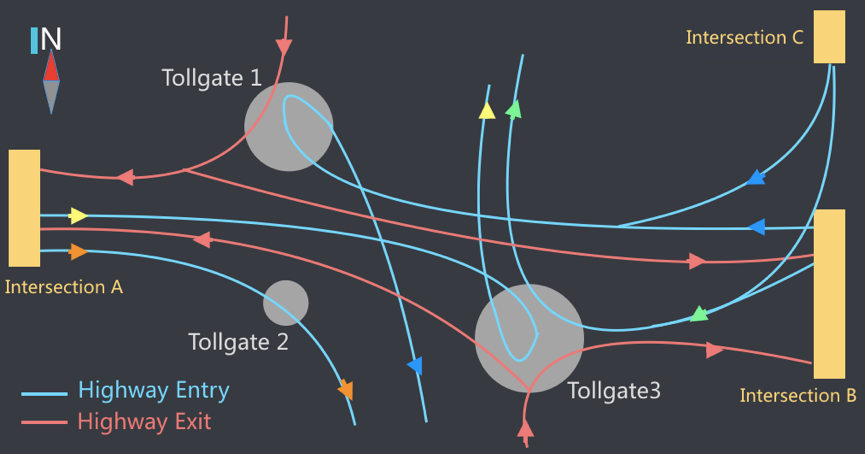
We may be witnessing an efficiency sprawl, as the pervasive cult of optimisation takes over other more meaningful cultural or political modes of discourse. One cause, given it’s increased stage-presence within local governance, maybe the wider culture of data science itself, often rewarding an approach to solving problems through the continual but marginal gains of ‘parameter-tweaking’.12 Often driven by online competitive leaderboards and corporate funded hackathons explicit commercial interests can remain unchallenged in the face of gamified cost minimization. For instance, in 2017 when Alibaba were selected as the organisers of the KDD Cup an annual competition sometimes referred to as “Data Mining Olympics”, they selected the theme of “Highway Tollgates Traffic Flow Prediction”. Although the event saw an incredible 3547 teams compete to improve the quality of software prediction across of a range of traffic metrics with measurable success, it also frames the problems of municipal governance in extremely slender data-centric terms. As Greenfield writes:
“It is particularly difficult to reconcile the optimization imperative with a community’s ability to learn from its experiences, or recover in a reasonably timely manner once disrupted …[I]t’s the very qualities of slack and redundancy that turn out to be essential to the effective functioning of a city over the long term.”
When we conflate the potential of AI at the urban scale with an ambition of optimisation, we may or course instead be entrenching a particular typology of management rather than hinting at ambitious future for our cities. The evocation of these types of systems as brain-like or neurological may also overstate the importance of unconscious executive function and autonomic responses within cognition. As Catherine Malabou presciently observed: Why doesn’t the resolutely obsolete character of cybernetic metaphors, revealed by current research on brain plasticity, leap out at us more clearly, given that we live in a period of ‘‘weak’’ Artificial Intelligence?”
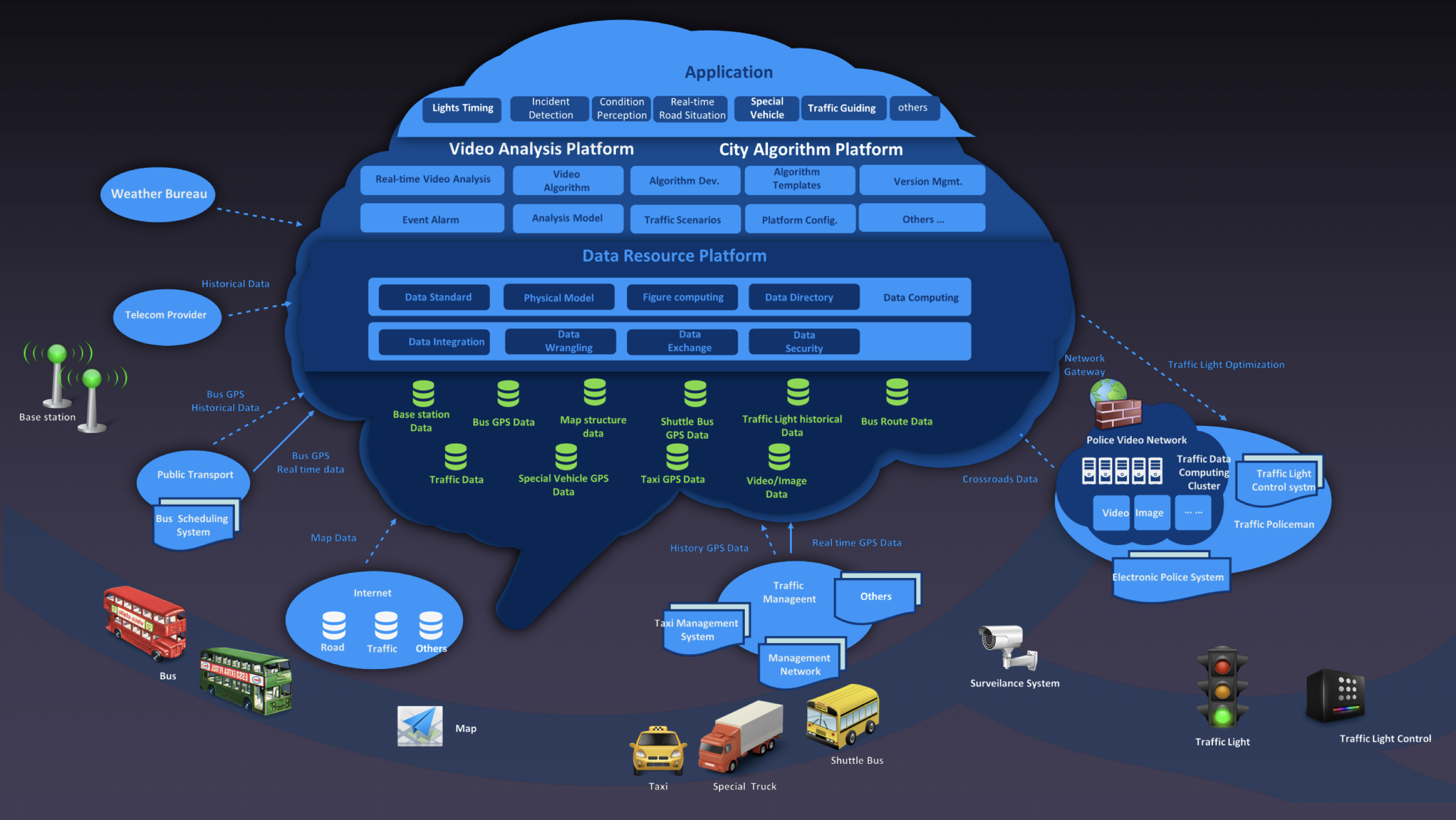
Indeed the operational ‘memories’ of smart cities and their ability to predict or plan, can appear to be extremely short, smoothing traffic feels like a particularly short termist vision. If we can anticipate these closed systems potentially cementing bad practices, we have to ask why our current infrastructural modes should be the ones we choose to bake into the nascent organisational intelligence of our urban environments, as opposed to being as receptive as possible to future reconfigurations. This is especially important given the ecological instability of many of the urban systems we complacently rely on and the limited focus of corporations pushing the adoption of their technologies.
***
We should be appreciative of how little we know about the potential topology of artificial intelligence given increase in available computational power combined with uncertainty as to the devices, network structures or other separate municipal scale operations, through which it might be distributed, embedded or shared. Where a non-porous model of centralised intelligence revolving around flows of traffic may falter most obviously it in it’s encounters with non-standard behaviors or design patterns of autonomous vehicles or other mobile non-human participants in the city.
We can see already how ‘smart’ urban governance failed to keep pace with the external cultural patterning of our cities through emergence of ‘‘disruptive’ services such as Uber(Eats), Amazon Delivery, AirBnb or even Netflix and Pokémon Go. We cannot ignore the complex urban footprint of consumer tech, from the redistribution of media to portable devices, to the sneakiness of the behavioural design patterns and the ‘intelligence’ of suggestive algorithms which drive consumption.
The ability to for city governments to practically centralise their operations may fall further behind global tech corporations as they explore different paths. For instance Google recently announced it’s systems architecture for federated learning, a radically decentralised methodology for on-device machine learning to counter growing limitations of bandwidth, latency and privacy associated with centralised or cloud based architectures. Combined with another recent Google unveiling, it’s low-cost high-performance Edge TPU, chipset specifically geared for machine learning, we may see the emergence of devices with impressively independent faculty for self-education largely operating outside networked control.* It would appear that the role of artificial intelligence in shaping our urban futures maybe as critical as it is amorphous but it may be reductive to resort to anthropocentric constructions of intelligence as the obvious configuration.
Of course as we require updated vocabularies so too must our politics adapt. As the global embrace of big data demonstrated however, the legal and policy implications are manifold, presenting serious unresolved – seemingly unresolvable – challenges in regard to data sovereignty, privacy and monopolisation. If we can anticipate similarly profound impacts brought about by machine learning, most acutely appreciated as a form of ubiquitous and embedded sensory intelligence perhaps we can reflect on Penfield’s famously re-proportioned homunculus model, and ask what is the somatotopic arrangement of a city that digitally senses itself. How do we plan the developmental hierarchy of the Homunculus City?
Going further, could we use this opportunity to rebuild the political agency of the city around the technological capacity to make sense of itself. Despite our uncertainty about the form urban artificial intelligence, or perhaps motivated it, there could be enormous municipal value in explicitly investing in open, reconfigurable, publicly controlled, city-scale sensor networks of various typologies if it is possible such infrastructure is envisaged as the site of genuine investigation, existing as observatories for making experimental discoveries about our urban environments, rather than primarily as organs systematic regulation or inherently operational in the service of capital.
It may be helpful then, for urban designers to cultivating a broader appreciation of human neural architecture and it’s capacity to develop sensory intelligence and flexibility over long periods of time. A key framework here may be neuroplasticity, the broad term referring both to specific neural adaptive mechanisms at the microscopic scale and the general reconfiguration of brain morphology at various developmental stages of our lives. As Moheb Costandi writes:
“The adult brain is not only capable of changing, but it does so continuously throughout life, in response to everything we do and every experience we have.”
The plastic brain demonstrates capacites, far beyond efficient information transfer, but in making knowledge gained over long periods of time becomes accessible and transferring awareness across domains. As Daniel Dennett outlines in Consciousness Explained:
“For truly high-powered control, what you want is an anticipation machine that will adjust itself in major ways in a few milliseconds ,and for that you need a virtuoso future-producer, a system that can think ahead, avoid ruts in its own activity, solve problems in advance of encountering them, and recognize entirely novel harbingers of good and ill. … Plasticity makes learning possible, but it is all the better if somewhere out there in the environment there is something to learn that is already the product of a prior design process, so that each of us does not have to reinvent the wheel.”
Invoking plasticity in an urban context maybe come in the form of seemingly unreasonable demands as we search for digital architectures that favour such long term planning, that can self-report their actions and demonstrate a semantic awareness of the processes they conduct, since in ecological terms not all computation is equally valuable. How or if we might crack open the black box of deep learning is of course unresolved, but that should not prevent the prioritisation of developing agents that explain attempt to themselves conversationally and even potentially more prone to useful failures, challenging their own insights, in turn encoding and sharing this knowledge abundantly.
Alongside this, we must find ways of adequately politicising and modifying the lifespan of learning and interrogate how long any given training model fixes it’s ideology into software. Further still considering that humans, broadly speaking can be driven by goals that might be unachievable, and our cognition regulated and expanded by generating memories – and of course forgetting them – these may become equally attractive infrastructural requirements for systems that purport towards ‘intelligence’.
A profitable are of study may be interplay of software and hardware at their potentially most wild frontier: medical imaging. There are of course innumerous active research projects into the use of machine learning within medicine, but the progress within imaging maybe specifically instructive, offering both profound potential to transform in medical diagnostics while exposes the conceptual complexities that emerge as we fuse deep learning software and scanning apparatus. Additionally, since algorithmic transparency is practical necessity for using AI solutions in clinical situations, the approaches developed within a medical context may have broader implications.
One of the most thorough propositions may be the recent landmark study by DeepMind and the Moorfield Eye Hospital London. Their approach uses deep learning data analysis on 3D OCT eye scans and has demonstrated “94% accuracy, matching the accuracy of expert clinicians at Moorfields Eye Hospital with over 20 years experience in the field”18 in diagnosing 50 different eye diseases. Their research is also noteworthy for taking seriously the challenge of algorithmic accountability to patient and doctor through the use of video and data visualisation. Their toolset will go as far as making treatment recommendations but is clearly positioned to provide support for, rather than disruption to, the interpersonal realities of health care.
Considered holistically, their work establishes a potential feedback loop between the physical health of our eyes and the performance of computer vision systems. The maintenance of algorithmic transparency – which may depend on human agency and process rather than any principles of software engineering – sustains our literal capacity to observe them at work. This touches on what seems like a highly significant parallel between the prominence of the ocular within neuroscientific discovery and the centrality of computer vision research within machine learning. A potential bias toward the visual or least the ‘image’ may have important consequences as the two scientific fields increasingly converge onto similar conceptual territory. Consider the breakthrough 2013 joint study by Scientists from the Max Planck Institutes for Medical Research and Neurobiology alongside MIT successfully reconstructed of a piece of tissue from the visual cortex of a mouse:
“Even though the cube of retina was only a tenth of a millimetre on a side, it contained around 1000 neurons and more than half a million contacts between them. “W e needed about a month to acquire the data and four years to analyse them” says Helmstaedter…. Current computer algorithms are very useful in this process but often not reliable enough…. In the current study it took 20,000 hours alone to make those decisions. To analyse an entire mouse brain in this way would require several billion hours of human attention.”
Such is the wild advances of computer vision that by 2017, just four years later – researchers, again the Max Planck Institute of Neurobiology published SyConn, “…a computational framework that infers the synaptic wiring of neurons in volume electron microscopy data sets with machine learning” that performs just such a task.
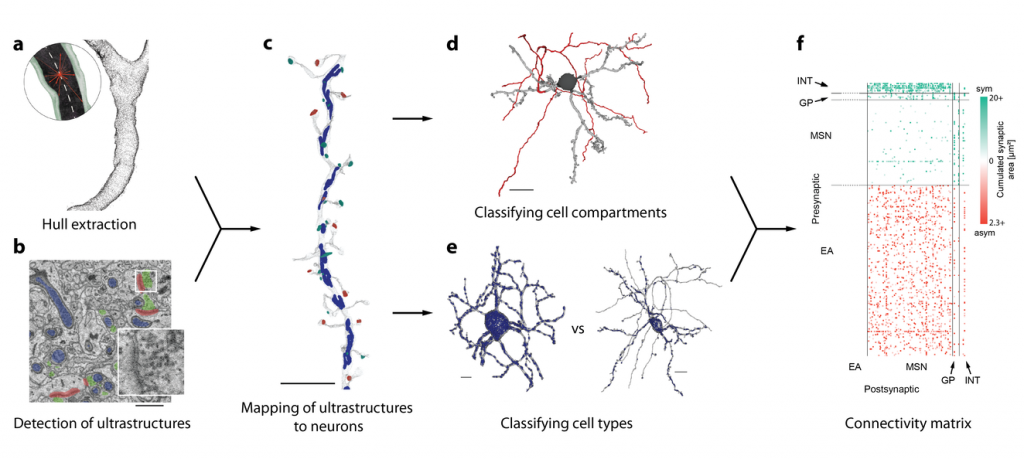
for volume electron microscopy
We can observe then an extraordinary feedback loop of scientific investigation wherein computer vision algorithms based on neural architectures become crucial to the analysis of the structure of the real visual cortex, in turn potentially offering neurophysiological insights with implications for improving the efficacy of the original algorithms themselves. 21
It points towards the curious reality that should we ever arrive at a more total and efficient method of neural mapping it will likely rely on software architectures that mimics the very thing under examination.
Just as the field of mathematics has been reshaped by computer-assisted proofs of theorems, constructing simulated intelligence may uncover underlying neurological principles in tandem or even in advance of more conventional physical experimentation.22 We might characterise such developments as an indication the scientific structures involved in this pursuit recognise the need to operate with the same degree of plasticity as their subject matter.
****
There are inherent political implications of neuroplasticity, with ‘the brain’ operating as both subject of scientific enquiry and site of political operation under cognitive-capitalism and ‘the attention economy’. In her book ‘What Shall We Do With Our Brain?’, French philosopher Catherine Malabou expands on Dennet’s formulations of consciousness with a provocation to appreciate the inseparable nature of the political self from the reality of neuroplasticity – noting that if the brain is plastic by default, the consequences for human experience are profound. Malabou’s insights are equally applicable to the city as it too as it becomes both increasingly computationally rationalised and an interfacial surface for software intelligence. She suggests that neuroplasticity is of such significance that rather than describe our brains with reference to broken allegories, such as the outdated models of the telephone exchange or the computer, we should reverse our thinking and instead use deploy the mechanics of a neuroplasticity as a model for society. Using the framing device of a ‘consciousness of the brain’ itself she writes:
“Any vision of the brain is necessary political. It is not the identity of cerebral organization and socioeconomic organization that poses a problem, but rather the unconsciousness of this identity. The persistent use of long-defunct technological models to represent the brain bars access to a true understanding of cerebral function. …To produce consciousness of the brain is not to interrupt the identity of brain and world and their mutual speculative relation; it is just the opposite, to emphasize them and to place scientific discovery at the service of an emancipatory political understanding.”
As our species increasingly moves to cities and in turn depends ever more on networked technologies, we may feel allure of an exogenetic intelligence to functionally operate on and within this complexity even more strongly. Without reference to a meaningful neuropolitics from which to shape this evolution we may be passively allowing the entrenchment counter-productive political logics that accidentally or purposely limit the adaptive capacity of our urban environments.
If we fail to question the false promise of under-cooked definitions of urban intelligence, apparently fixated on rigid self-regulation, we may miss the plastic potential of the city as it develops a capacity for self-reflection. Since the most functional advances of machine learning appear currently as an expanded typology of observation rather than sincerely useful ‘creative’ capacities, we should celebrate and invest in our richer capacity for examination as a municipal necessity while avoiding the fanfare of inadequately curious, nefariously predictive urban regimes.
***
References
- Has artificial intelligence become alchemy?, Matthew Hutson Science, 4 May 2018, Vol 360 Issue 6388