
In his 2012 review of the movie The Avengers, film critic of The Boston Globe, Tom Russo noted:
The word “universe” is standard parlance in the comic book industry. […] You don’t hear “universe” much in the film industry. Here in the real world — or Hollywood, at any rate — the prospect of mingling franchise characters is dauntingly complicated. Sure, we get a novelty such as “Alien vs. Predator” here and there, but rarely. Different studios hold rights to characters. Actors’ contracts can be tricky to coordinate — and so can their egos, one imagines.
– Super Group – ‘The Avengers’ assembles all your favorite Marvel characters in one handy wannabe blockbuster
The quote is a useful reminder that the era of the Big Comics crossover franchise, at least in cinema is barely a decade old.
Marvel’s ambitious pace has been matched by staggering financial returns. Including the movies they used to strategically (re)introduce audiences to individual characters before The Avengers first assembled, the Marvel Cinematic Universe (MCU) is now a catalogue of 28 films, with a further 11 in development, all in just 15 years. A single franchise that has amassed billions of global fans and as of 2021 represents 30% of all US box office revenue and generated $26.5B in global revenue since 2008.
The methods, platforms and regularity with which we consume, or become consumed by, has also been changing at a dizzy pace during this time. Marvel, along with Harry Potter, DC, Star Wars, Lord of The Rings (to name just a few) are the juggernauts of IP, speculative fictional universes that are inducing a new era of immersive fandom that is continuously reprocessed across every concievable contemporary media from film, books, comics, computer games, mobile apps, theme parks, trading cards, cosplay and seemingly unlimited avenues for merchandise or online social presence and communities.
The condition of fandom is by no means new, although the connective tissue of the digital age is allowing the entertainment and media companies controlling these franchise to offer the contemporary fan something altogether more boundless and integrated. Captivating oceans of glossy, social activated and deliciously addictive content. If “politics is downstream of culture“, then fandom may very well be the melting glacier atop the mountain.
What might be novel though is the scale and rich complexity that underpins the proposition of these ‘universes’, the result of decades of output by hundreds of authors and artists. Marvel films for instance can draw from a staggering diversity of story arcs and characters, given there are approximately approximately 27,000 comics in the series, so many in fact it is considered by some to be the largest continuous human narrative and it’s speculated that only a handful of people, notably author Douglas Wolk and Marvel archivist Peter Sanderson and have read them all. The 4,868 pages that make up the Harry Potter books (including spin-offs) seems slight by comparison.
This vastness enables a type of story-telling that can sustain countless spin-offs, callbacks, knowing references – interwoven narrative threads that might take a dozen movies to resolve, only to reappear in a video game demanding 100 hours of gameplay. A screenplay writer friend of mine once theorised that one of the major innovations of the crossover comic book film is that there is so little requirement for exposition that the movies can essentially begin with full tilt action, when in a more polite era of Hollywood the audience might expect to get at least 10 or 20 minutes to settle in.
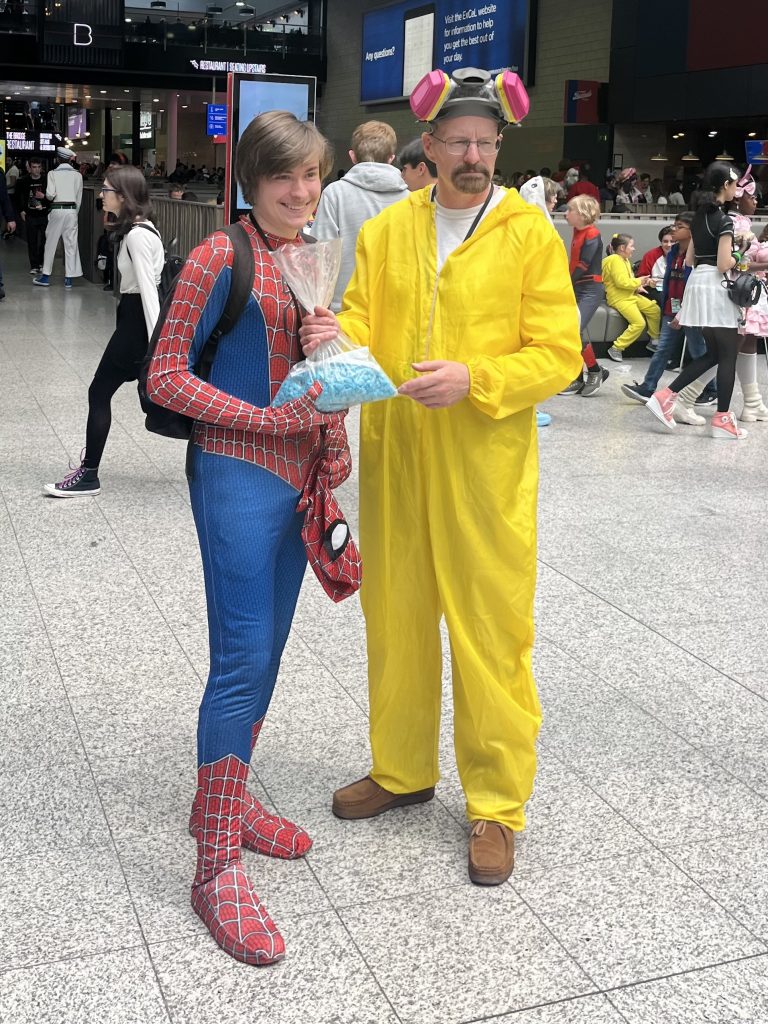
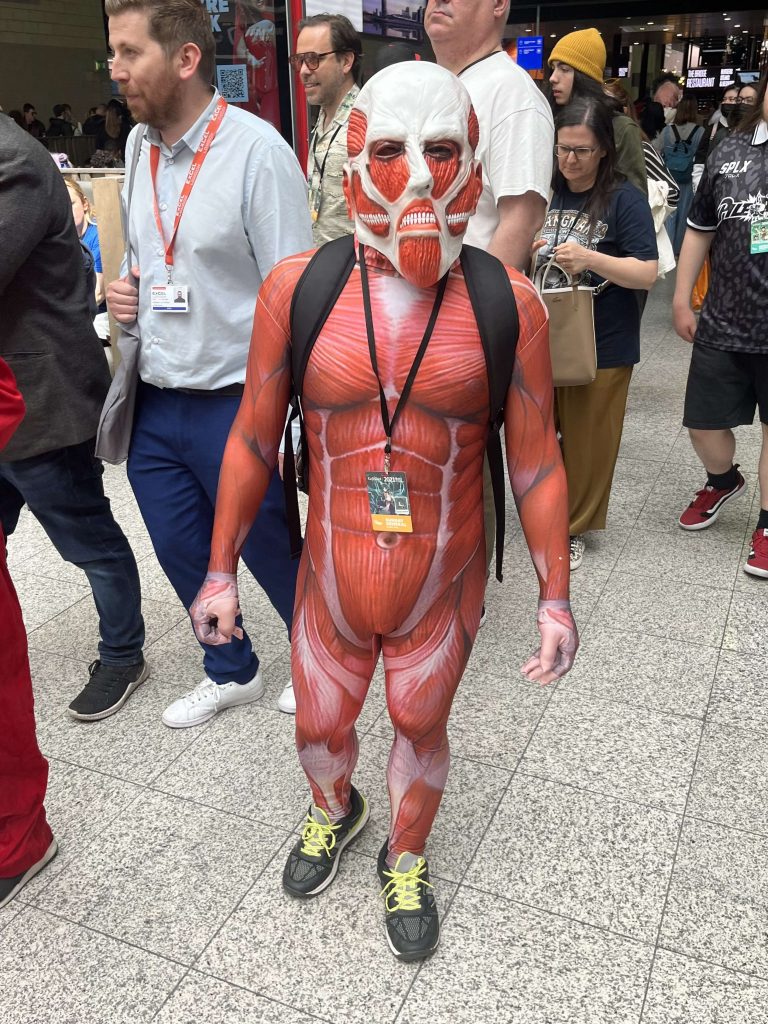
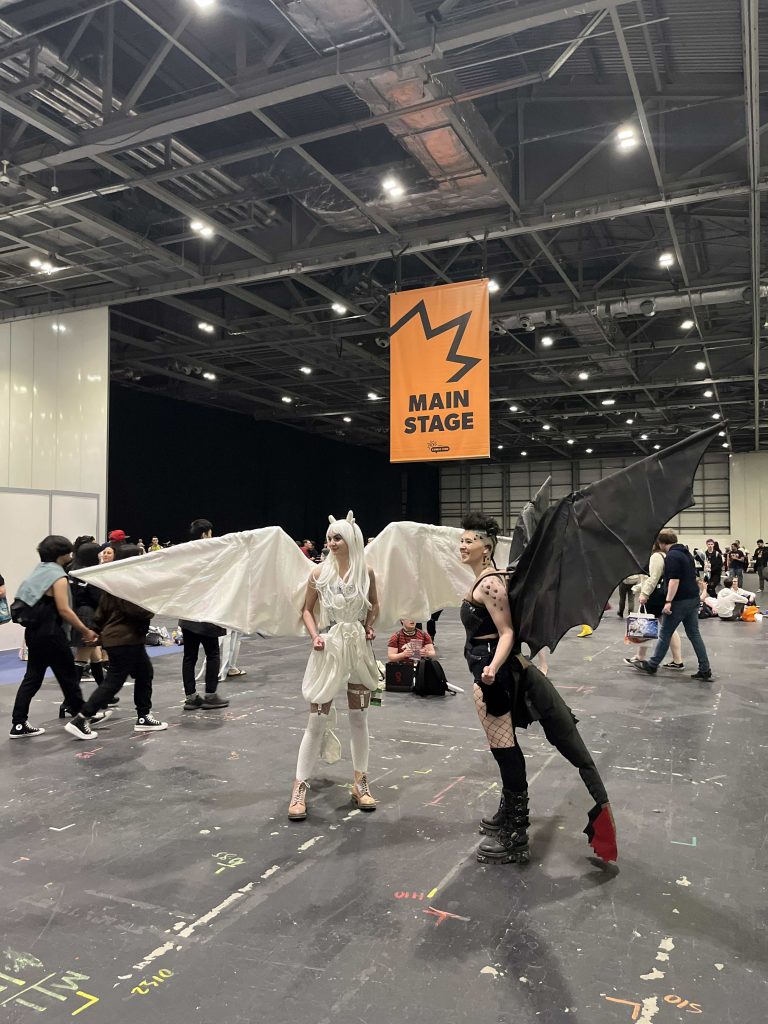
Personally speaking however, I feel like I missed the bus altogether, despite being deeply curios my knowledge of comic books is very patchy, which is why I took the chance to go to Comic Con, or more fully Movie Comic Media (MCM) London Comic Con 2022 at The Excel Centre. The trip was anything but premeditated however – I had been travelling on London’s new Elizabeth Line when the carriage was suddenly overwhelmed with Cosplay – when the (Marvel) universe gives you a sign, you better act on it.
***
The cradle of Comic Book conventions is Comic Con San Diego, first held in 1976, steadily growing to 13,000 visitors by 1990, before exploding in popularity and reaching 130,000 by 2010. Whether Comic Con or Comicon or Comic-Con is a legal trademark has been a major legal battle. I incorrectly assumed it was all part of the same happy family, but Comic Con London is distinctly not commercially related to San Diego.
For all the observations that follow, and some of the overt cynicism I have for certain aspects of the industries involved – almost everyone attending seemed to be having a contagiously fantastic time. Although precise numbers are hard to locate, The London Comic Con is one of, if not the largest convention held in the UK, frequently receiving upwards 130,000 visitors, rivalling Glastonbury in sheer numbers albeit requiring distinctly less investment of both time, money and exposure to the elements.
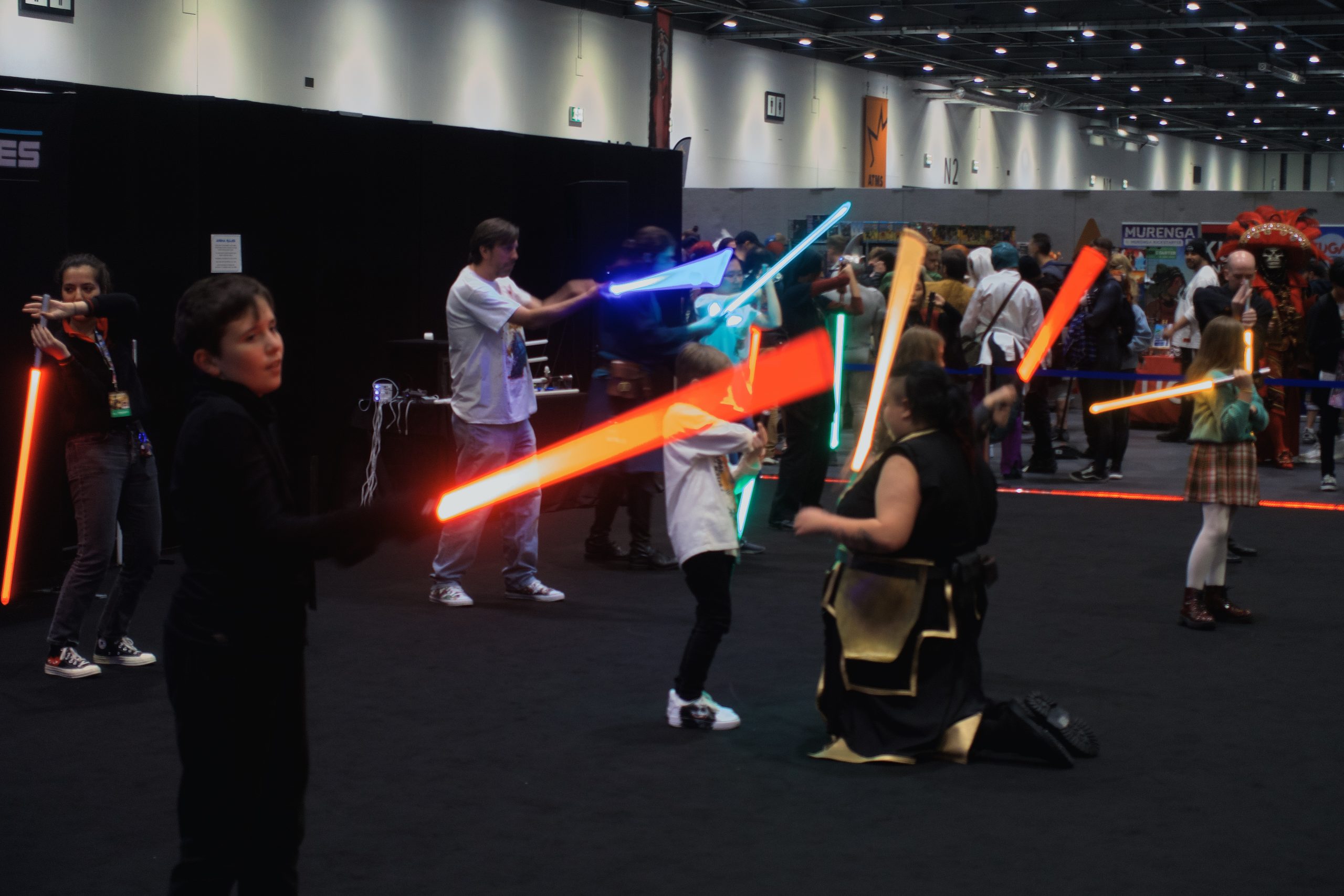
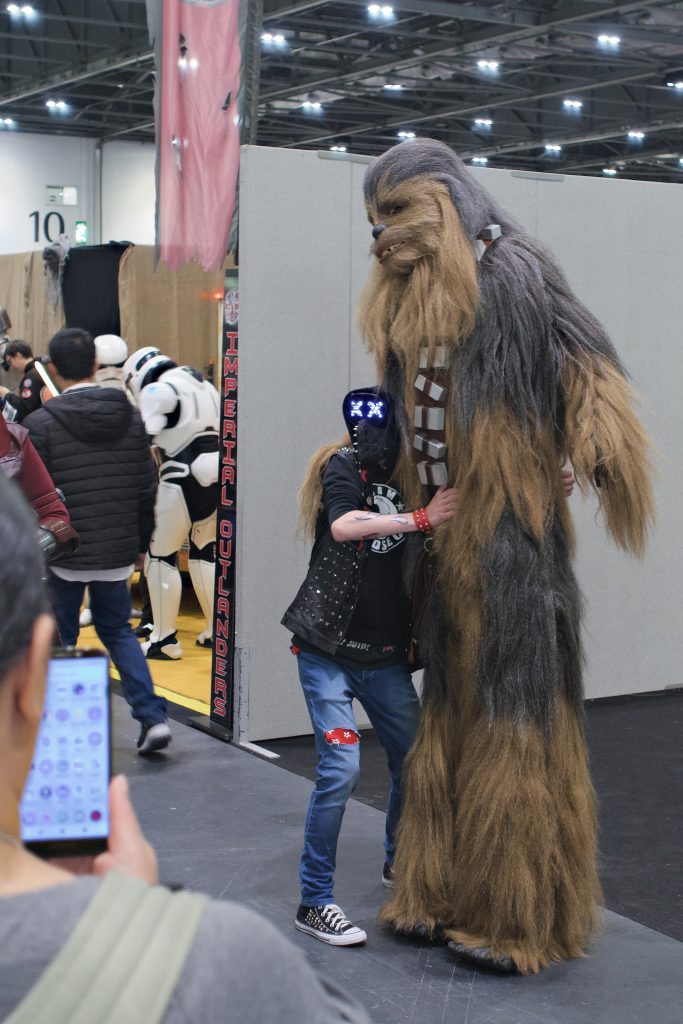
While the fictional universes of comic books is the glue, the real show is of course the Cosplay. It’s trite observation, but Cosplay obviously gives affords an experience out of the everyday, a cheat code to a different way of socialising. The atmosphere at Comic Con is far more electric than I anticipated, a tangible slightly nervous atmosphere of hyperactivity, neon energy drinks and imported Japanese sweets. The buzz also seems almost entirely be generated by attendees interacting with each other, a plasma of awkward but joyful high-fives, photo opportunities and sparks of recognition.
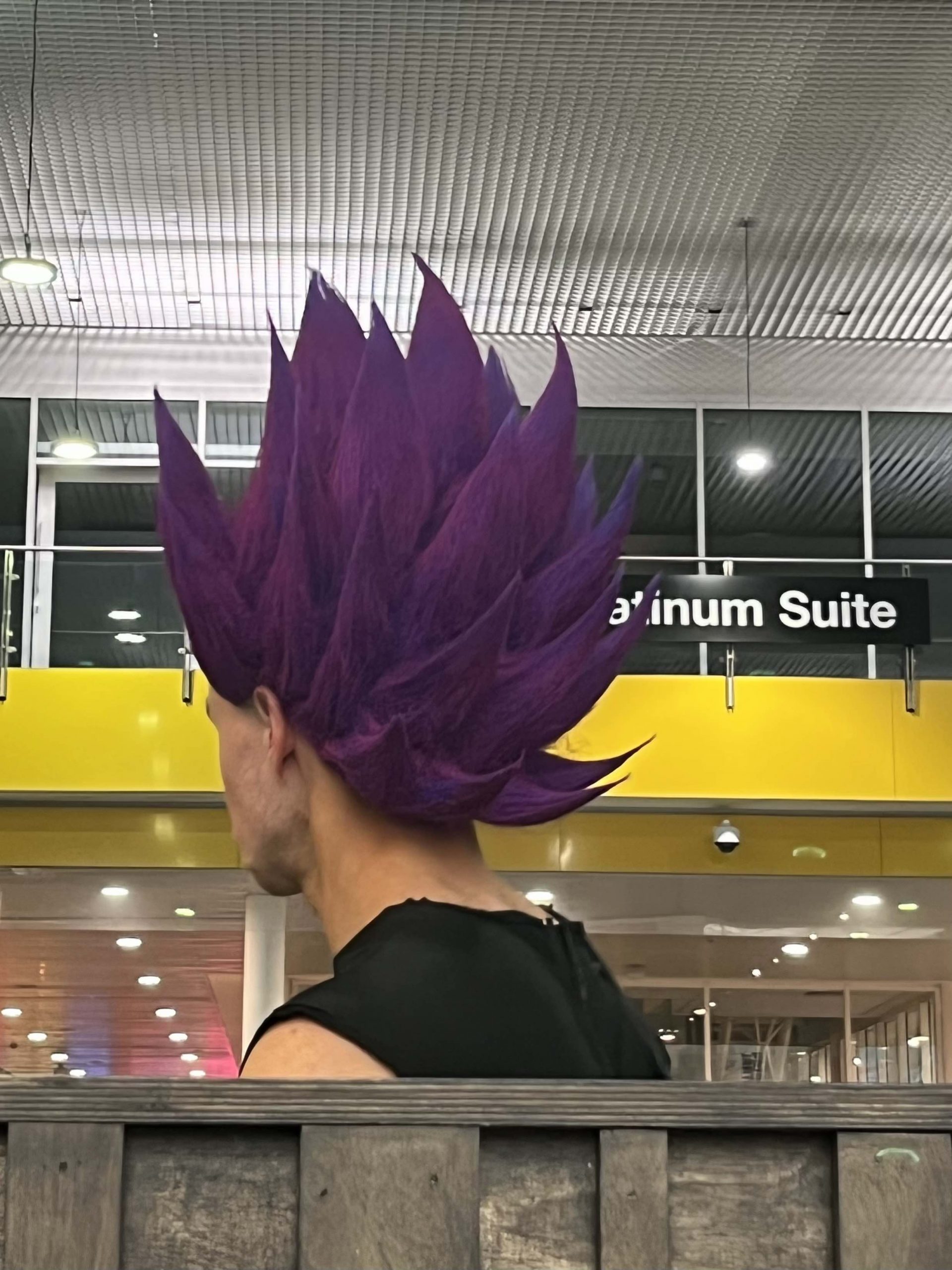
While clearly providing space for a particular form of personal expression in overdrive, it’s simultaneously and studiously playing by a very particular logic. Comic Con is not a spectator sport,
Everyone in attendance is either in everyday clothes or somewhere on a spectrum that builds from a few accessories, a bit of make-up, a knowing t-shirt, a mask to fully realised cosplay. Even the encounters with people in oversized, calculatedly terrifying horror costumes with might otherwise feel warmly friendly.
Possibly the most jarring approach would be to attend as a character fully of your own invention, especially if it wasn’t very good. Afterwards I also discovered that the American comedian Stephen Colbert did exactly this – attending Comic Con San Diego as artfully terrible “Prince Hawkcat“.
There seems to be something of an unwritten rule that prevents the professional writers, actors and anyone in the ‘biz’ dressing up – “don’t get high of your own supply” – although Cosplay it would seem is bounded the rules of it’s fictional universe and some separation between fan and creator. There is a tradition of celebrities attending in disguise (frequently while having something to promote) although it’s curious that this is distinguishable from simple being in ‘costume’.
Conventional Wisdom
Through the lens of the original premise – that these franchises and ‘fandom’ are building a serious gravitational energy in society – the ritualism of Comic Con, seemingly governed by code of signals to fellow fans and celebration of everything fan-based represents this potential at it’s most polychromatic. In their recently published book The Dawn of Everything, David Graeber and David Wengrow, reassess the perceived origins of egalitarianism by appreciating the complexity and diversity of how early human communities self-organised. They do so in part by establishing the importance of rituals, in particular seasonal festivals that fostered “political self-consciousness… as laboratories of social possibility.” A key component of this was the temporary upheaval of entrenched or status hierarchies, as they note:
… sometimes festivals are moments where entirely different social structures take over, such as the ‘youth abbeys’ that seem to have existed across medieval Europe, with their Boy Bishops, May Queens, Lords of Misrule, Abbots of Unreason and Princes of Sots, who during the Christmas, Mayday or carnival season temporarily took over many of the functions of government and enacted a bawdy parody of government’s everyday forms. … The really powerful ritual moments are those of collective chaos, effervescence, liminality or creative play, out of which new social forms can come into the world.”
The Dawn of Everything, David Graeber and David Wengrow
Comic Con might is by no means an isolated extremity, all number of ‘seasonal’, increasingly popular, global festivals ranging from Burning Man, Coachella or even the Miami International Boat Show might also be equally valid subjects of investigation as contemporary rituals.
All Dressed Up and Nowhere To Go
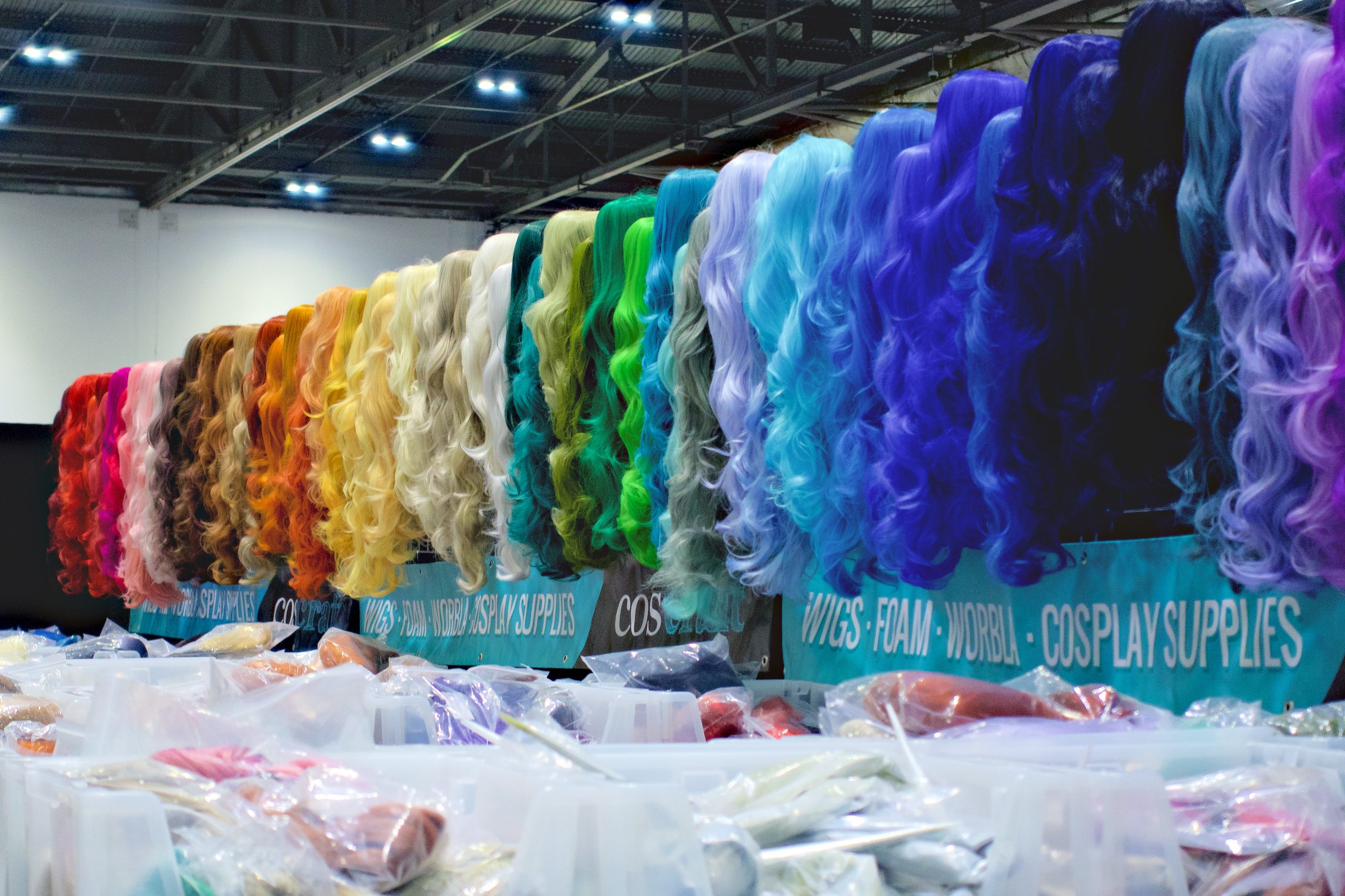
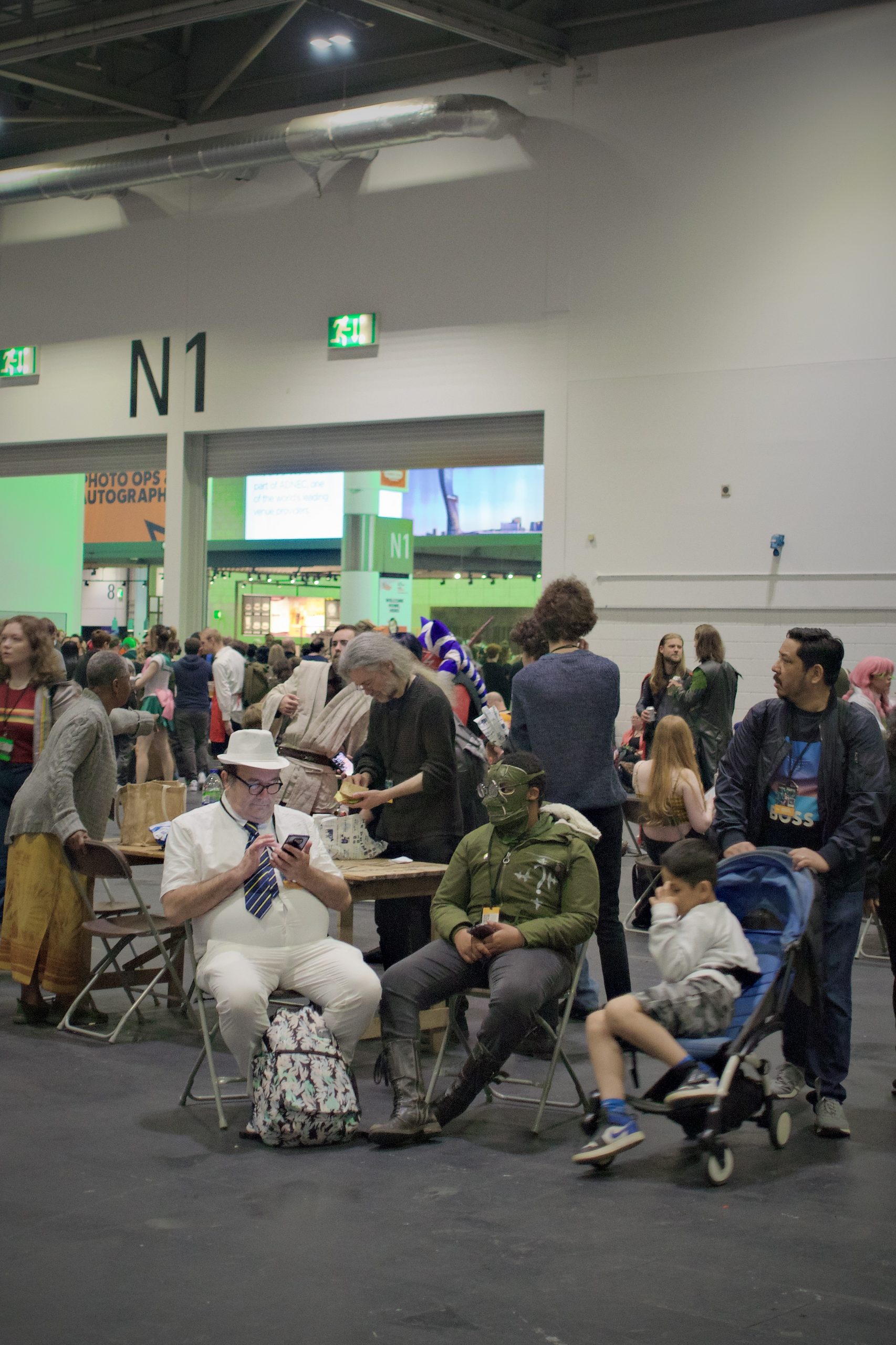
At the same time, one of the things that surprised me the most – despite a main stage and various panels and enormous scale – there isn’t all that much to actually do. Granted I am not naturally inclined to spend hours browsing through comics but it didn’t really seem anyone else was either. There’s lots of queues to join, a zone to play vintage video and board games, a throng of food trucks parked incongruously inside. Much of the event is itself about taking photos, being present with the lore, acknowledging sparks of deep fan knowledge. As a result my it felt equal parts over-saturating and underwhelming.
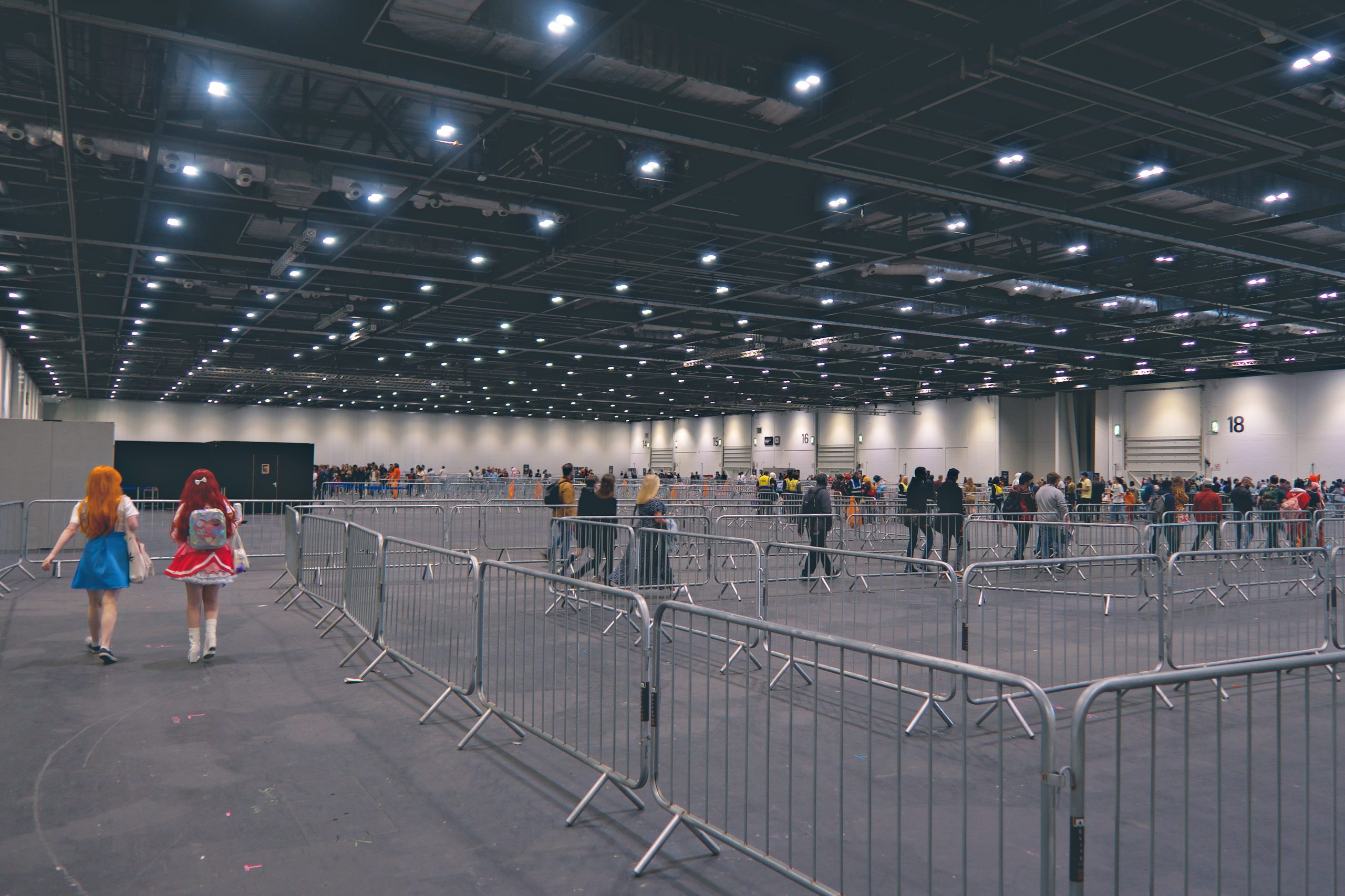
Experiencing Comic Con for the first time though, what struck me most was the was the staging of the event itself. I was expecting something altogether more grandiose in setting but in the end it then it feels completely swallowed by the Excel center. It creates a very particular condition, an indoor car boot sale of dense fantastical fictional universes floating in endless, very contemporary infrastructural Junk Space.
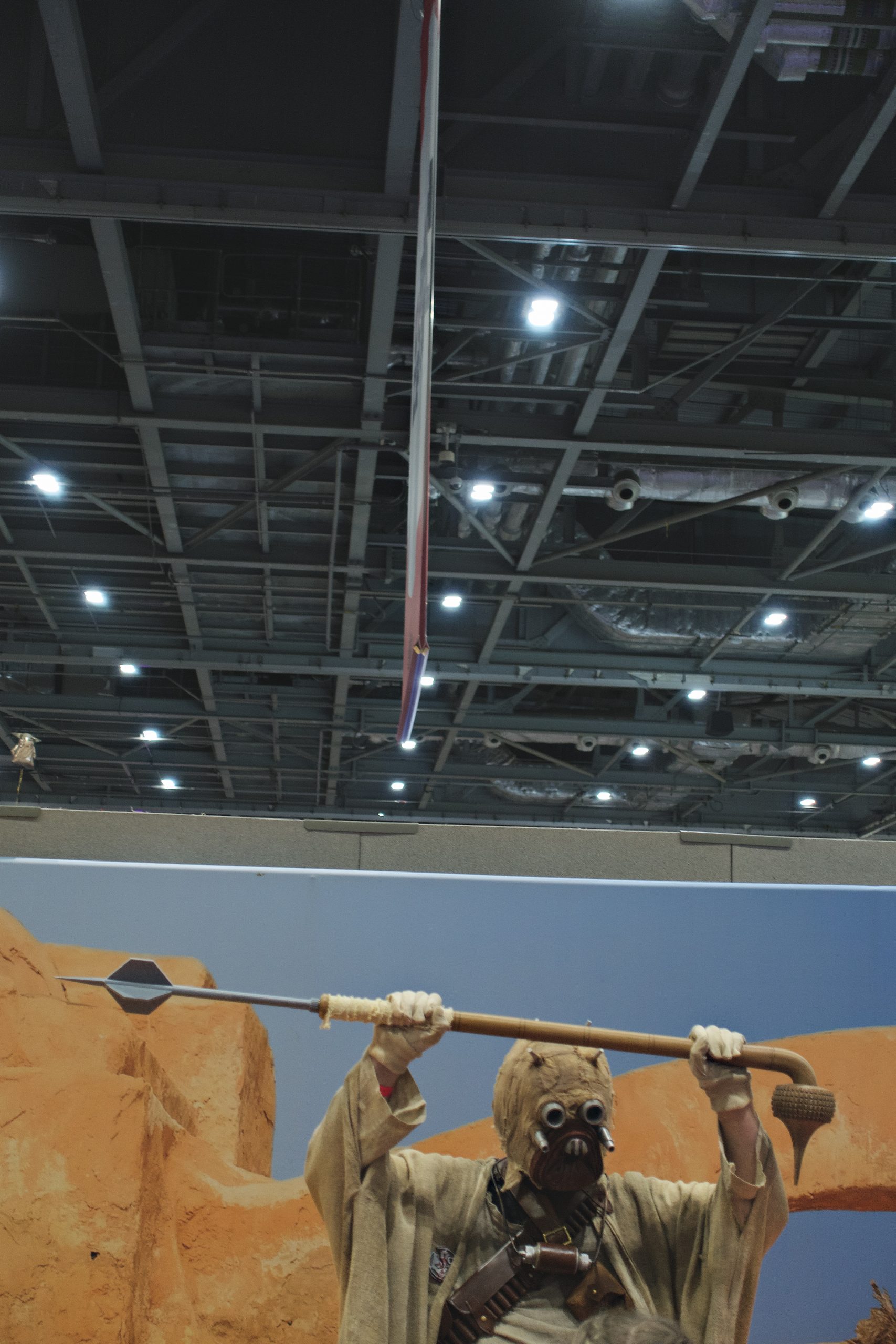
Conventions and trade shows have this sinking all-purpose soullessness and drabness to them by default, given the necessarily blank backdrop of convention centres, but expectations have probably also been warped by other events, notably technology and car shows where budgets are exponentially higher. London Comic Con isn’t altogether very showy. This may be the particular cavernous blandness of the Excel Centre, looking at through images of Comic Con San Diego looks more vibrant, co-ordinated and vertical – at least in the photos.
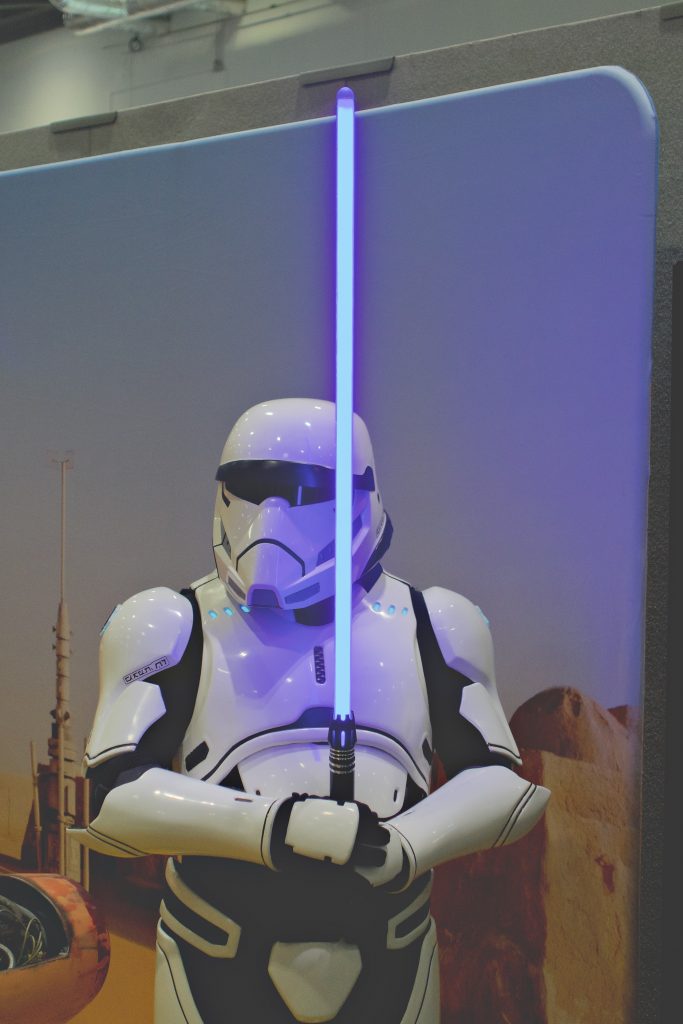
My assumptions have probably been distorted still further by watching videos of a new generation of immersive theme park zones, which offer visitors a full manifestation of their favourite fictional universe.
Spearheaded by The Wizarding World of Harry Potter at Universal Studios Florida, the current gold standard is the 14 acre Star Wars: Galaxies Edge, at Disney World, Florida. The latter is a full-stack chunk of the Star Wars universe laborious detailed by Disney’s Imagineering Department, with a unique currency, language, menus of interstellar cuisine and repackaged ‘alien’ bottles of Coke and Sprite and workshops to build a custom lightsaber (costing an additional $199.99). It was named one of Time magazines “World’s Greatest Places 2019” and apparently popular enough upon opening that it all but emptied the rest of Disneyland.
So popular in fact that an essentially identical version has opened on the West Coast at Disneyland, with the same design and layout, shops and attractions. The most significant differences appear to be some tweaks to the colour scheme and two extra colourful milk-and-rum cocktails you can only find on the West Coast. Florida now however boasts the addition of the Galactic Starcruiser, a new experiential hotel costing a minimum of $4,809 per room on the two-night ‘voyage‘ that is part immersive theatre and part grounded “screens-for-windows” cruise ship.
The desire to lose ourselves is these universes is seemingly limitless and astonishingly lucrative for the major studio, and so it’s easy to imagine that such events and places will continue to balloon in scale an ambition. Graeber and Wengrow, again on the subject of early human rituals:
“What’s really important about such festivals is that they kept the old spark of political self-consciousness alive. They allowed people to imagine that other arrangements are feasible, even for society as a whole, since it was always possible to fantasize about carnival bursting its seams and becoming the new reality. … “May Day came to be chosen as the date for the international workers’ holiday largely because so many British peasant revolts had historically begun on that riotous festival. Villagers who played at ‘turning the world upside’ would periodically decide they actually preferred the world upside down, and took measures to keep it that way.”
While by no means thinking of Comic Con’s attendees as ‘villagers’ If we might think about what sort of political position the ‘fan’ represent with respect to the major studios. Playing ‘Queen for the Day’ has a direct relationship to the power structures of the day, but is pretending to be Iron Man a different repositioning? While fans of the genre will often decry that mainstream criticism is dismissive of the nuanced, richly political and social commentary that the most celebrated are built around, Comic Con itself doesn’t immediately seem like an hotbed of revolutionary action, accidentally erupting or otherwise.
There is a reversal of sorts in operation though, these billion dollar industries could not exist without their fanbases and in a sense Cosplay is the assertion of the value of the fan identity. If a sizeable chunk of your disposable income, time, attention and perhaps most importantly imagination is sunk into these worlds, it’s not unreasonable to read Cosplay as the a kind of ritualistic challenge to a mode of sovereignty and system of rules.
Curiously government action in Japan is likely to bring Cosplay under copyright law where it has previously existed in something of a legal grey area that was mutually beneficial for fans and rights holders alike. The introduction of similar rules elsewhere could seriously destabilise fan-creator relationships. A curious feature of the contemporary fanbase it’s self-awareness. To be a mature fan is also to navigate between IP’s, aware of the frequently transactional nature of the experiences on offer, the shadiness of certain operators, to preempt the expiry date of a given character and to appreciate the purchasing power afforded by of one’s own obsessions.
A paper Graeber and Wengrow’s reflection on rituals is partly drawn from is Adam Seligman‘s Ritual, the Self, and Sincerity, (2008), he writes:
… pure ritual puts questions of belief or truth aside in favor of the shared world… Thus ritual encompasses the ambiguity of life in a unique manner. It allows one to “play” with such ambiguity in a manner precluded by an undue concern with the authenticity of one’s actions and beliefs. Ritual unshackles the mind from a need to believe in a dogma of our choosing, as long as we act properly. Ritual then is a critical device that allows us to live with ambiguity and the lack of full understanding.
– Adam B. Seligman,
Speculating somewhat reductively, intense fandom also seems like an appropriate reaction to the increasing complexity of everyday life and the exponential growth in available information and connectivity. Fictional universes clearly offer escapism and respite from an otherwise extremely noisy reality while fostering real communality, at a time when many other institutions seem genuinely unable to. So while drawing a coherent politics from fandom is complicated, it maybe be useful source material for understanding political solidarity, if only for the quality of the relationships it establishes and the ease at which it’s participants dissolve their differences.
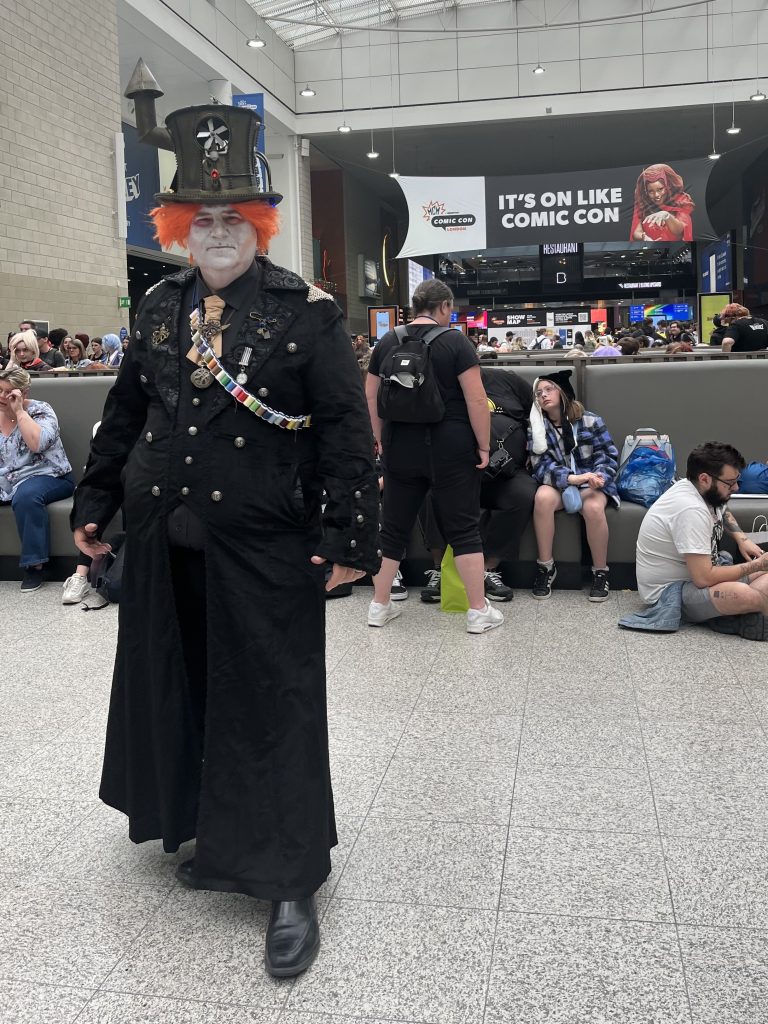
As the slogan runs, It’s On Like Comic Con.