Update September 2022 – This was published in December 2021, just months prior to Russia’s invasion of Ukraine and only weeks before the initial build-up of troops. A year later against the backdrop of the illegal invasion and the devastation it has wrought, the observations might now be read in an entirely different way. I felt it was important not to edit the original writing except to acknowledge this and as well as my support for the people of Ukraine.
—
This text and set of photographs were the result of a single day – 18th August – spent walking through the centre of Moscow in the summer of 2021.
I had the sudden appreciation that, despite having spent significant time in the city, I spent very little of it simply wandering around. Moscow’s gargantuan roads don’t exactly invite psychogeography and the extremes of its climate narrow the annual windows for any extended exploration, but while visiting earlier this year I found myself heading out with an empty schedule and only a minimal plan; visit Lenin’s Tomb.
Like many other aspects of contemporary life – the digital has become a default scaffold in comprehending the city, both in the professional spheres of all that is ‘data-driven’ but also in the personal relationships we build with places, especially those unfamiliar. The text below, that emerged during that day felt like something of a reminder to myself about the value of finding ways to organise subjective thoughts about places and maintaining an alertness to the lived experience of cities away from the safety of the desk and the smartphone.
I also realised as I edited the text that the date was coincidentally the 30th anniversary of the beginning of the failed ‘August Coup‘ against Mikhail Gorbachev by Soviet hardliners. The instigators of the coup accosted Gorbachev at his dacha on the evening of August 18th, 1991 before mobilising a ‘state of emergency’ during the early hours of the following morning – an event that would serve as a key precursor to the collapse of the Communist Party and the dissolution of the USSR.
***
18th August, 2021.
If the one of the basic conditions of ‘the city‘ is a phase state of continual change, then Moscow is very good at being a city.
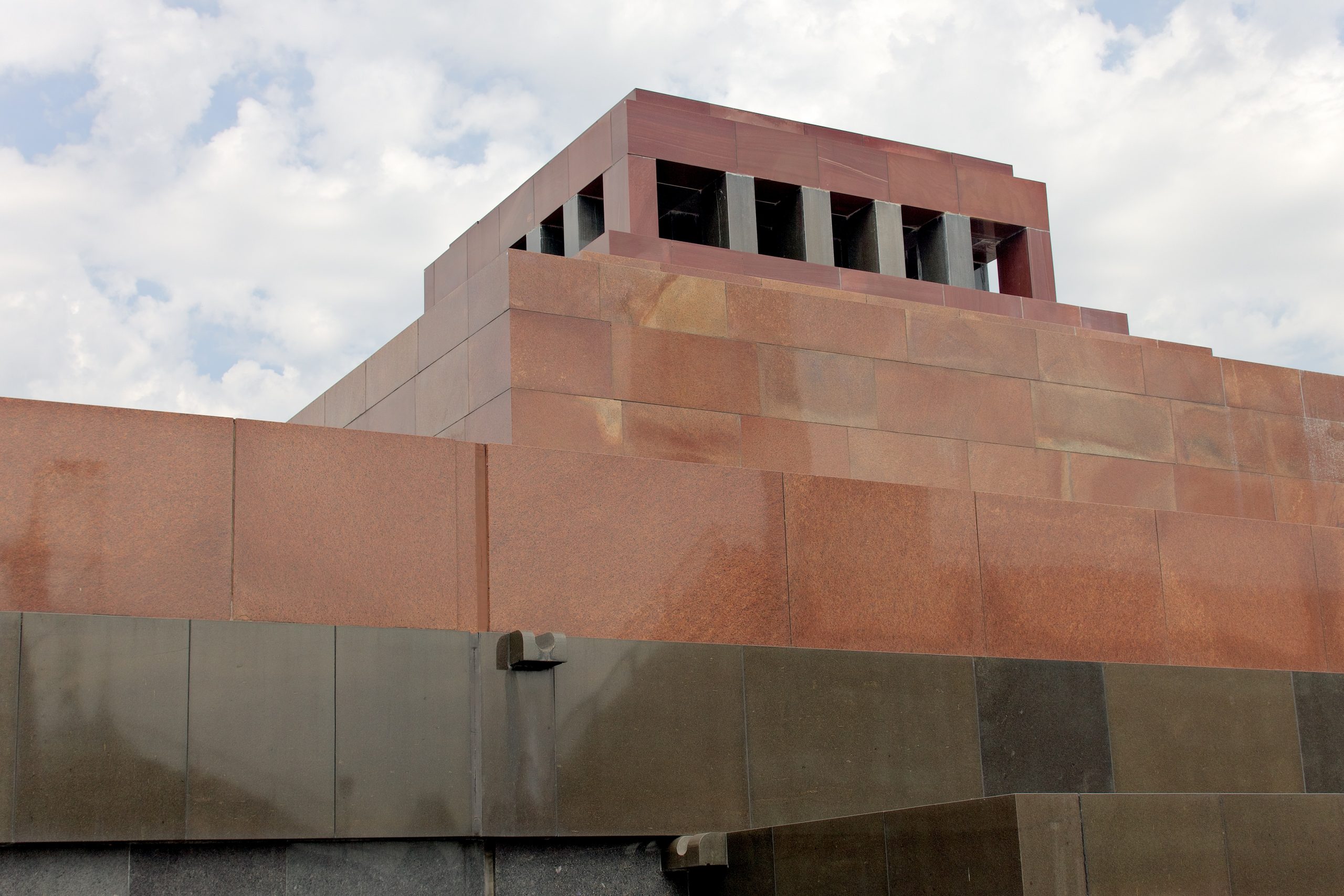
Ironically for the start of a photographic essay reflecting on a city changing, the day begins queueing outside a building dedicated to an absolute form of preservation, the contents of which is closely guarded against visitors taking pictures: Lenin’s Mausoleum in Red Square.
Lenin’s corpse – like many of Moscow’s extremities – represents a great act of maintenance. Beyond the rigorous management of humidity and temperature, he may of course been, like many of the cities other residents, the beneficiary of some light surgical assistance.
The limited window for visiting – 10am – 1pm sometimes three, sometimes four days a week – was one of the first things I researched on arriving but somehow a trip itself never materialised. Over time of course, actually queueing up to enter the Mausoleum had slipped down the list of indefinitely postponable activities belonging to someone no longer a tourist.
The persistent rumour that Lenin’s body might be relocated, supported by recent legislative changes in advance of the approaching centenary of his death – and with it perhaps the most logical moment for such rearrangements – gave me the sudden appreciation however that I might miss my chance.
Why visit at all? A small element of morbid curiosity maybe, but even more simply perhaps simple historical fomo. Russia, through the melting cold war telescopes of the west, retains an almost clumsy aura of intrigue and the mausoleum is the most stark, saturated clump of mystery to the outsider. Preservation is not Moscow’s natural mode, and yet Lenin’s tomb, and the processes of its maintenance remain, a generation after the system that built it collapsed.
The experience of visiting the mausoleum is of course odd. The common trope is to discover that Lenin is smaller than you expect – he is. The most obvious sensation is the curious blend of chilled air and flat, rose light. Despite its grandeur and solemnity, it feels not unlike the set-piece in a music video and the entire interior visit lasts perhaps as long. Yet its hard not to be struck by the sheer historic intensity and the curious staying power of its symbolism, still locked in the centre of Red Square, three decades after the end of the USSR and more than a century after the revolution that would create it.
In English the ‘red‘ of red square has a singular translation relating only to colour although occasionally with an implied relationship with communism despite the name being of 17th century origin. In Russian I’m told that ‘Krasnaya‘ of ‘Krasnaya Ploschad‘ has a more expansive connotation sharing the historical etymology with the Russian word for ‘beautiful’.
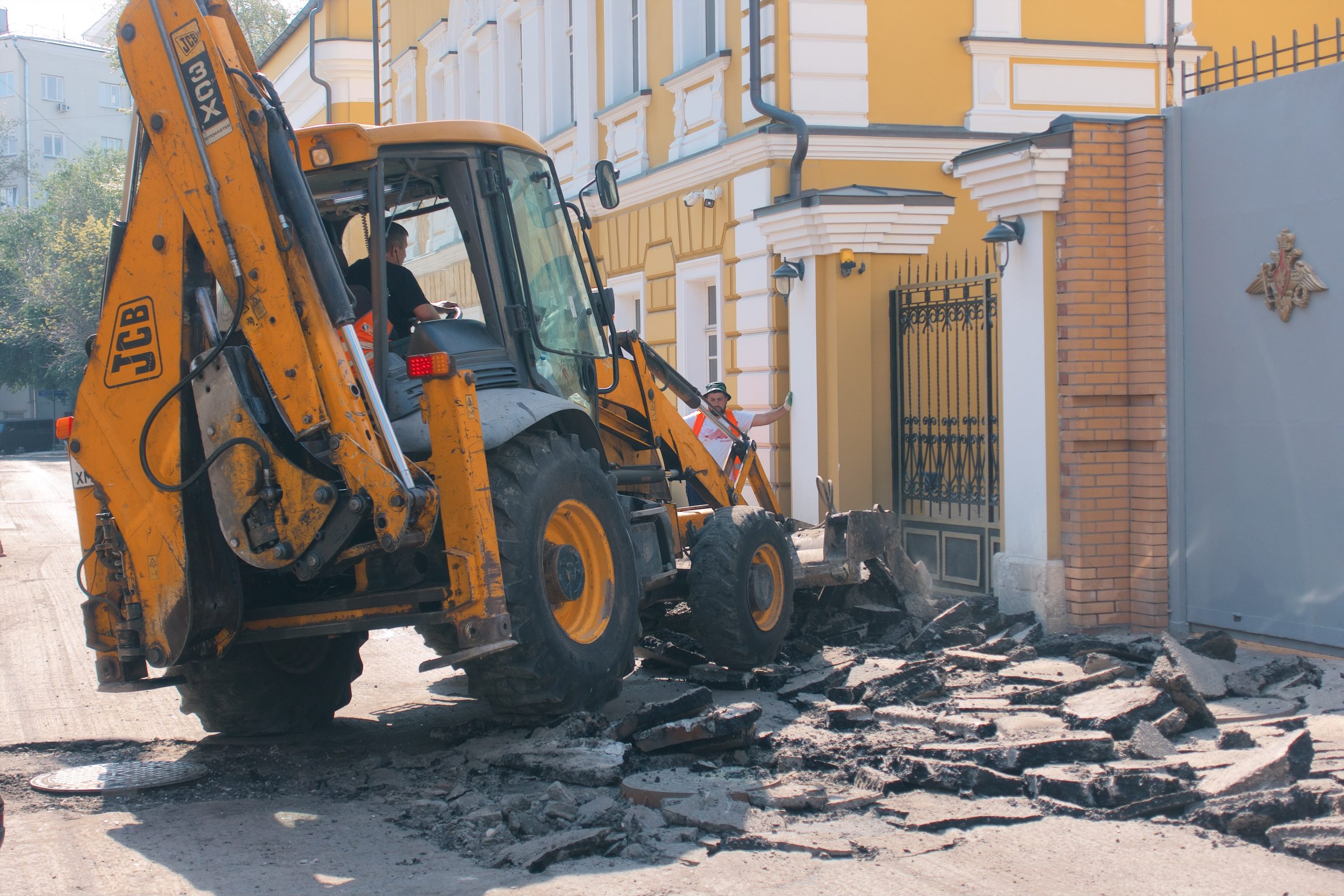
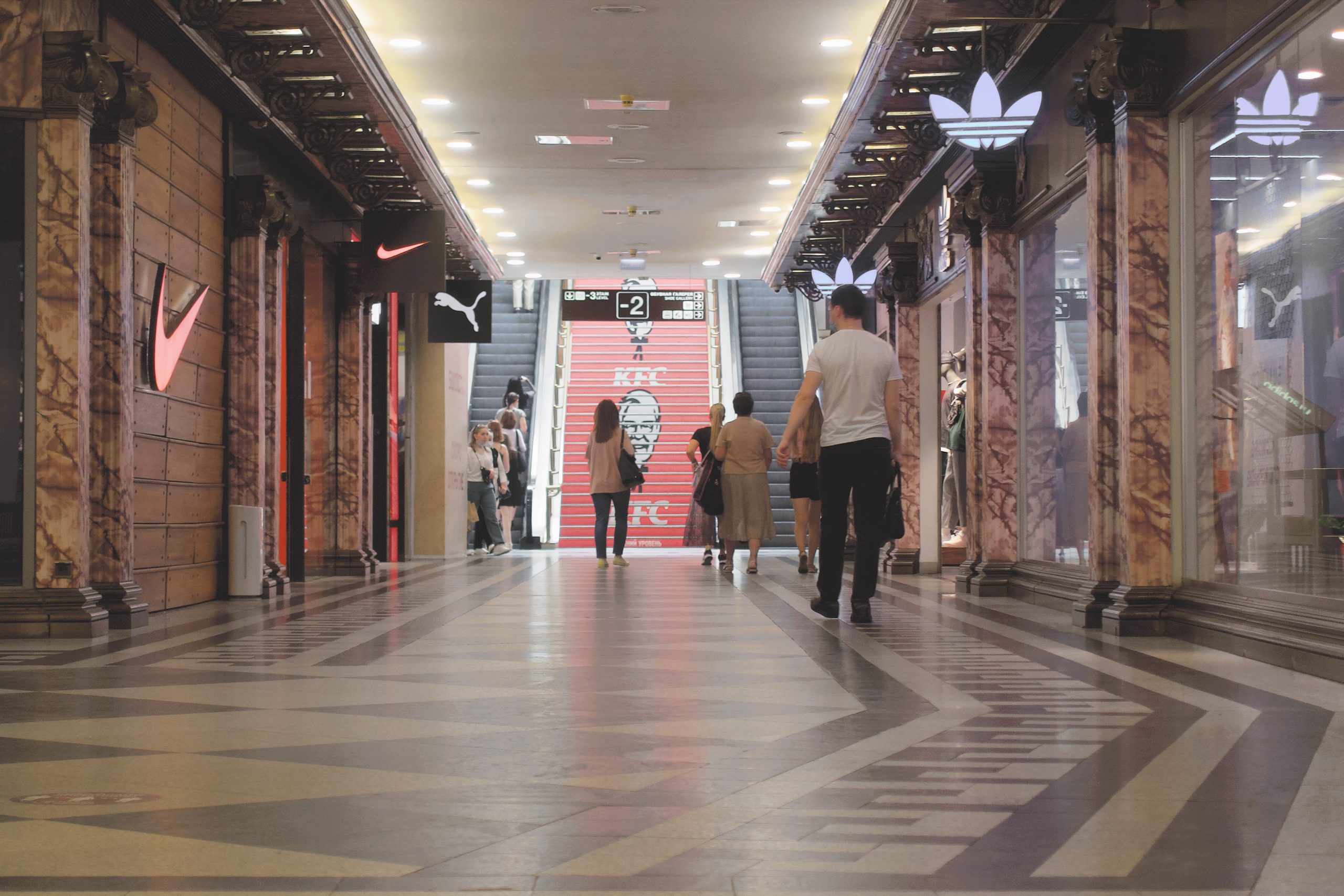
Walking away from the mausoleum and trying to avoid sticky summer heat I take the first downward escalator I encounter, underground into maze of nearby malls. The subterranean grandly multi-storey arcades fuse stone grandeur with faux marble, setting the precisely invitational fit-outs of multinational brands between columns of painted corrugated metal.
Any visitor searching for material and historical anachronisms in the centre of Moscow will find plenty but this may be a sideshow from getting comfortable with the complexity of the type of city that that this actually produces.
To get to know a city is to hunt for clues as to its personality. Yet any experience of a city, especially one as large is supremely subjective and partial, it can only be a sliver of interactions mined from turbulent deep complexity, especially in a place so layered, so expressive of the tension between the grand plan and the individual. Yet to think about any city in detail is to also reflect on the simple importance of the human compulsion to urbanise which far outlives any specific political eras that a city hosts.
Moscow and the wider region has long qualified as a mega-city, not least on the basis of more realistic population estimates that include those not officially registered, bumping its official estimate from around 12 million, to something more like 15 or even 20 million inhabitants. The global mega-city and the study of agglomerations however seem to have drifted out of favour within the discourse of urbanism and architecture, despite the condition of rapid urbanisation steam rolling ahead as forecast.
One explanation may be the growing recognition that as urban formations have morphed into something beyond the bounds of a previous definitions and we may be missing the language or a frame of reference by which to consider them. As Neil Brenner and Christian Schmid noted in ‘Planetary Urbanism‘ (2012), based in part on the emergence of new scales that “…despite its continued pervasiveness in scholarly and political discourse, the category of the “city” has today become obsolete as an analytical social science tool.“. Moscow appears to be a useful example of why this might be conceivably true.
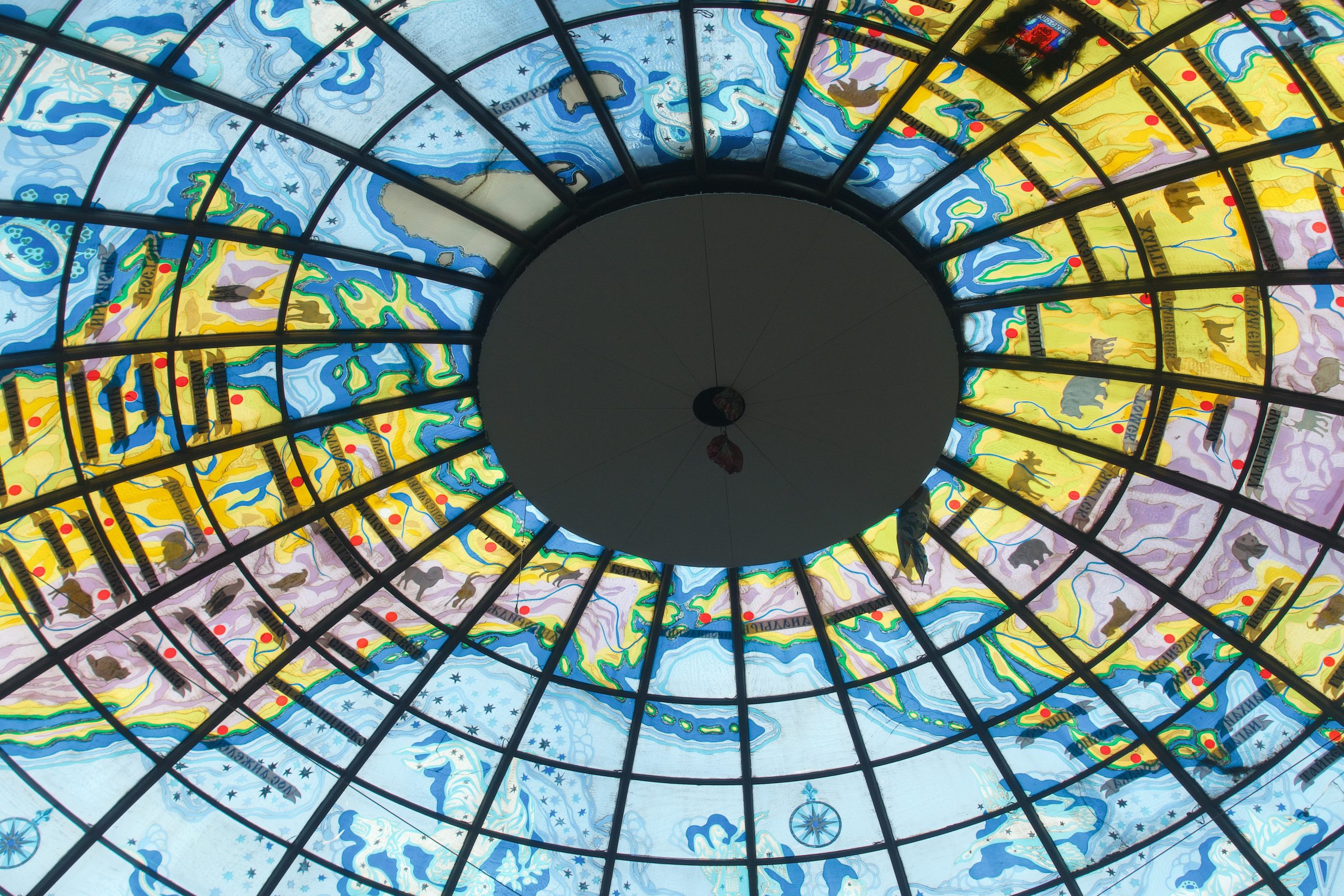
There is also an on-going reconsideration of the boundaries and tendrils of the networks that support a city both ecologically and economically, especially within the context of climate change and planetary scale systems and the explosive expansion and importance of digital infrastructure to reconfigure exactly how the city self-organises.
The case study of Moscow here is not just instructive as a combination of scale, political centrality and history but also its current porosity to new technological systems and platform experimentation, somewhere between the status of an ‘early adopter’ and maximum viable prototype.
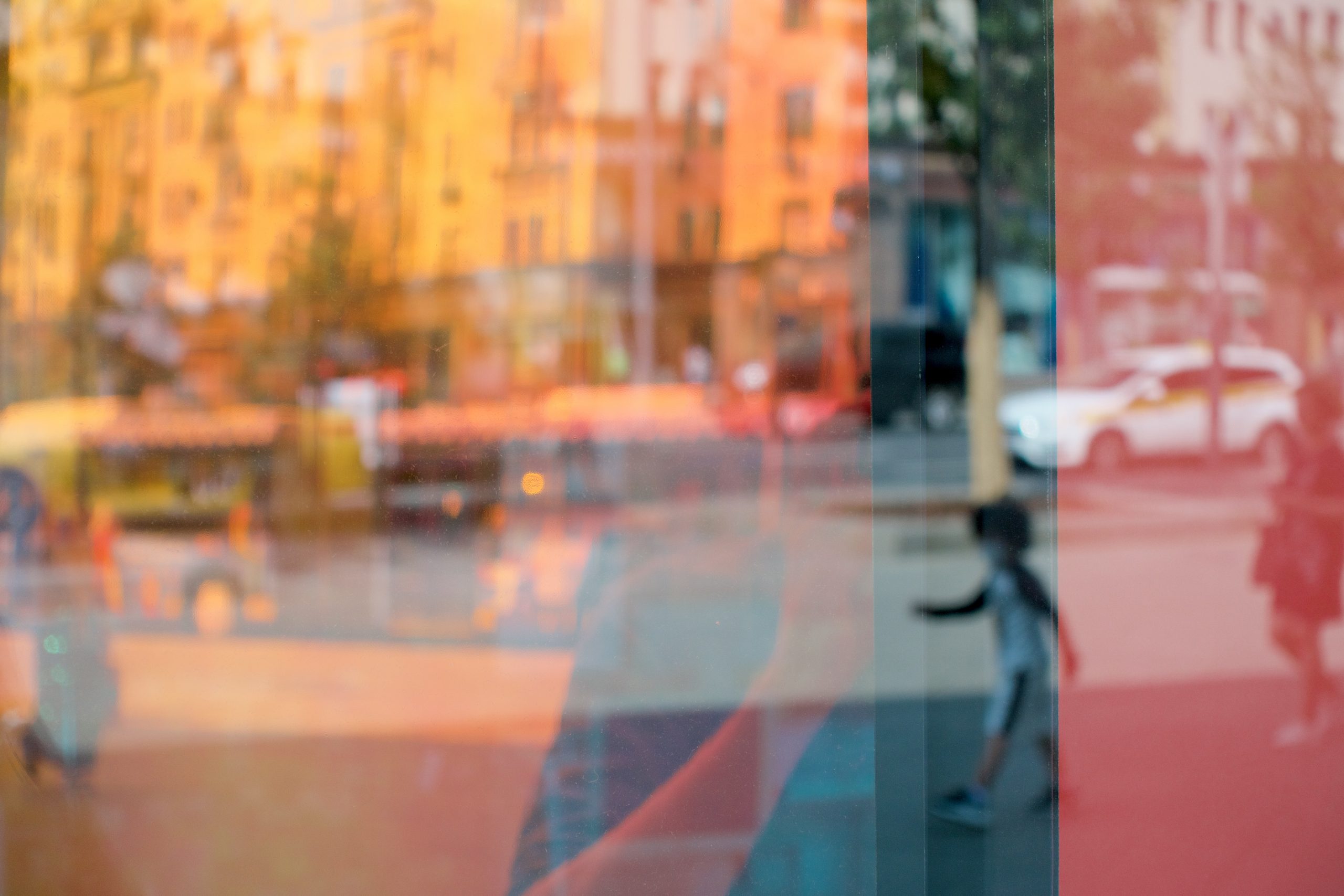
In the foreign popular imagination the 20th century picture of Moscow and the Soviet Era is perhaps more firmly connected with a one particular colour scheme than perhaps any other place, at any other time. This categorisation makes it easier for outsiders to sustain an idea of Moscow that might obscure the fact that it is exemplary of a kind of novel vastness and complexity taking place amid the rapid uptake of networked technologies that nibble away at the edges of urban governance and perhaps even fundamental definition.
The fact that Moscow’s future feels like its hard to predict may actually be a clue that it can tell us something significant about the nature of cities and urbanism of the coming decades. If Moscow is no longer ‘red’, what colour is it?
***
For outsiders curious about the relationship betwen urban infrastructure, governance, Moscow’s recent history is a rich mystery and a tangle of legacy systems. What actually happened to its institutions, systems and infamously dense and rigid administrative processes during the collapse of the USSR – an event of perhaps without real parallel, in recent history at least in terms of systematic upheaval? What happens when you unravel a state, let alone a super power?
History counts, but let’s start with the water.
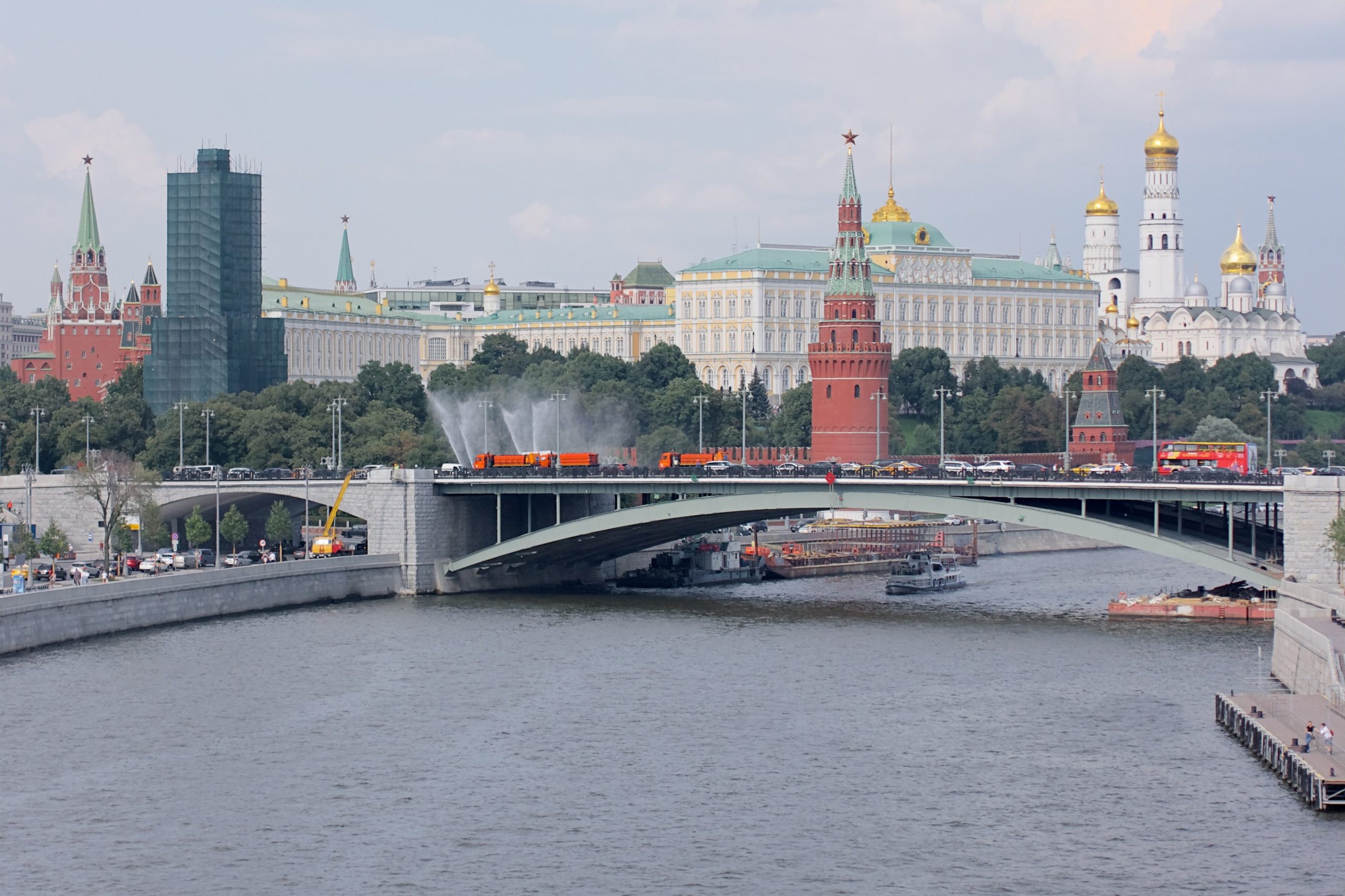
Moscow appears at times, locked in combat with the thermodynamics of water. The feeling of continual transformation is partly driven by the extremes of its weather, the speed at which the snow arrives, the late summer light, blinding spring sunlight on as yet unmelted snow.
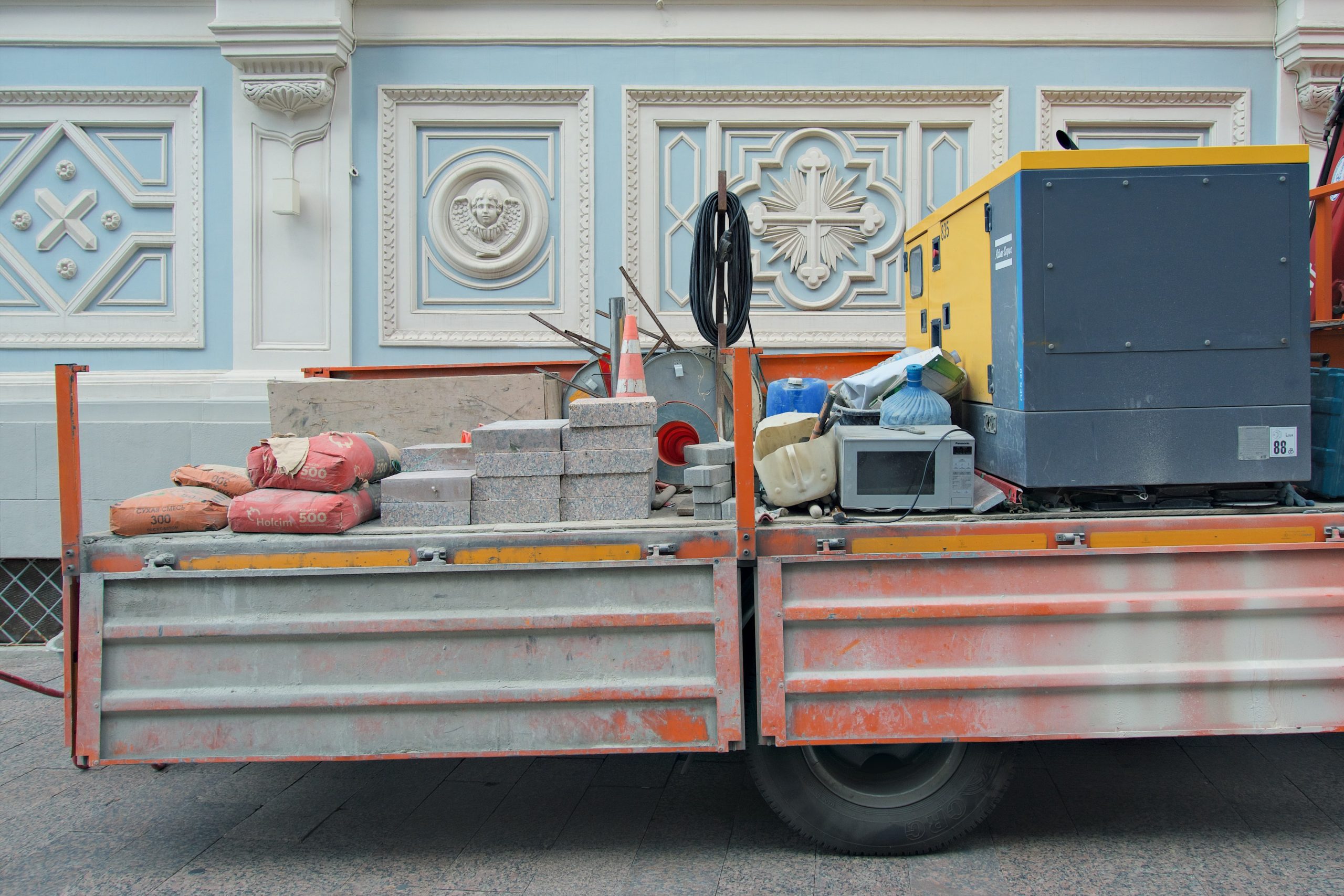
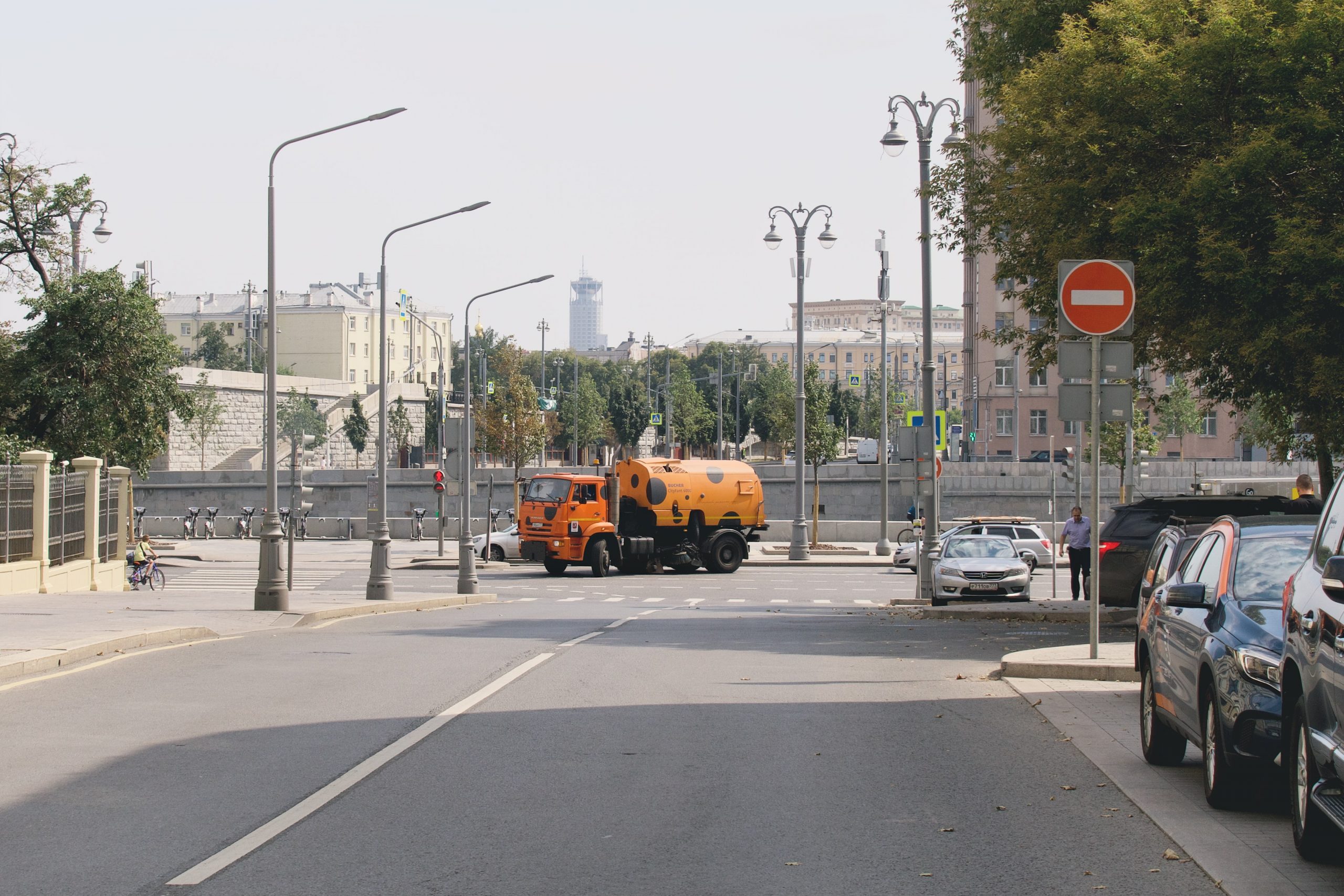
It may be that the vast municipal team and army of Kamaz trucks are rendered more visible simply because they are decked out in a consistent glow of orange, but the sheer number of people at work on the upkeep of bridges, pavements, stairs, surfaces, pipes, can seem sometimes seem remarkable. You can’t walk for ten minutes without encountering men digging holes.
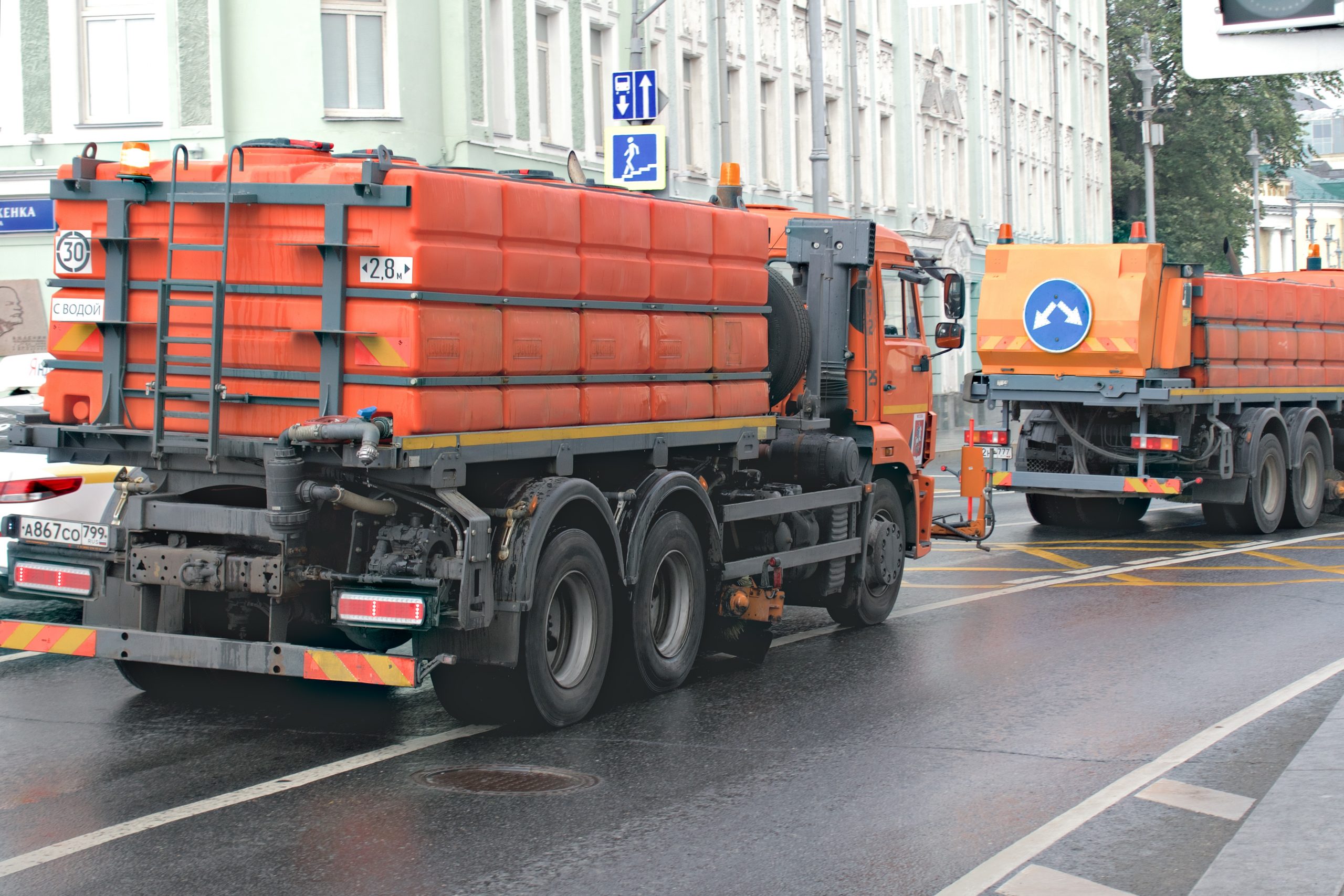
Winter brings the daunting and Sisyphean task of clearing, shifting and transporting tons and tons and tons of snow. In summer, the same bouncing orange rolls through the city, this time spraying water apparently to cool asphalt.
In winter, the sky is a blur of saturated tungsten and faded purples that never quite settles, pulsing far brighter than most cities, and frequently coating entire districts in other worldly fogs of color, as the lights of Arbat and Luzhniki Stadium bounce smudges of RGB between snow and low winter cloud.
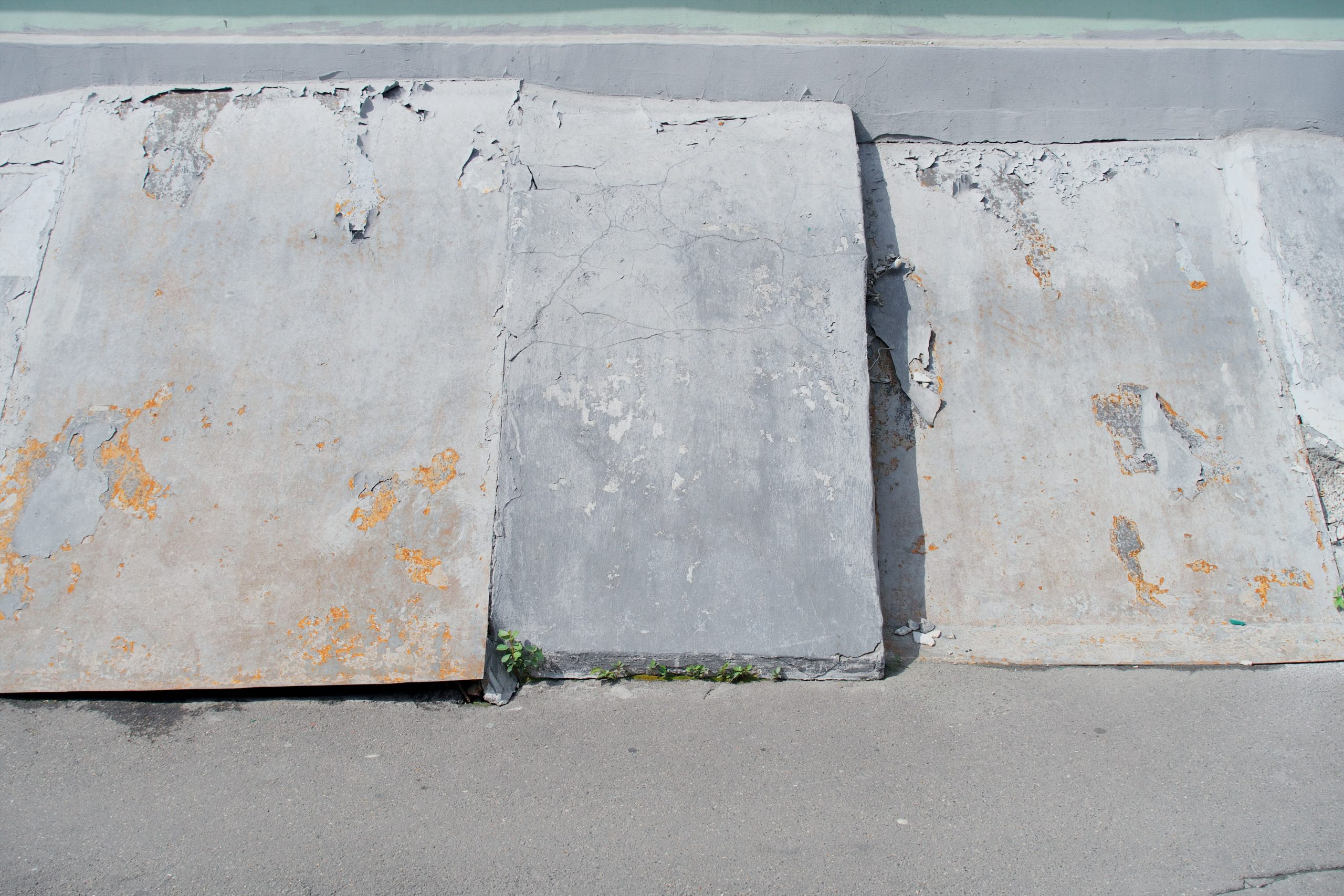
In the city centre, many buildings at street level appear to only loosely tolerate commercial enterprise, giving the impression that consumerism is a guest in a longer history. Further out the landscape, like the hinterland of most metropolises, appears peppered with monolithic malls.
Many of the 20th century buildings, mostly housing blocks are starkly legible with their facades a direct expression of the decade in which they were completed. Attempting to assess the age of some newer buildings in the city however is complicated by contemporary revivalism. There are sometimes few clues to distinguish between those constructed in the last 20 years or the 200 before, with stitched facades that have been rebuilt or dissolved and a resurgence of freshly squeezed church domes.
***
Russia’s borders are uniquely stretched and enormous – the map of its population distribution represents a flirtation with the far edges of habitability. The cliché of Moscow straddling between Eastern and Western mentalities is still broadly useful although there are very few major cities or capitals that co-ordinate so relative much power, especially so far from the sea. There is so much that is unique about Moscow that it is unhelpful to search too deeply for cities to compare with but the most obvious might be Saint Petersburg. However its naval primacy, baltic air and historic preservation – in particular the diligently maintained height restrictions preventing any building being taller than the 30m Winter Palace – only highlight how unique both places are. That the two largest cities should feel so different is itself a telling clue.
As I was reminded fairly consistently when I first arrived in Moscow, a classic confusion by the outsider is to confuse Moscow with Russia. It may be more productive to conceptually separate the two. Along with Saint Petersburg, also starkly different from the rest of Russia, they may be better understood as almost different countries.
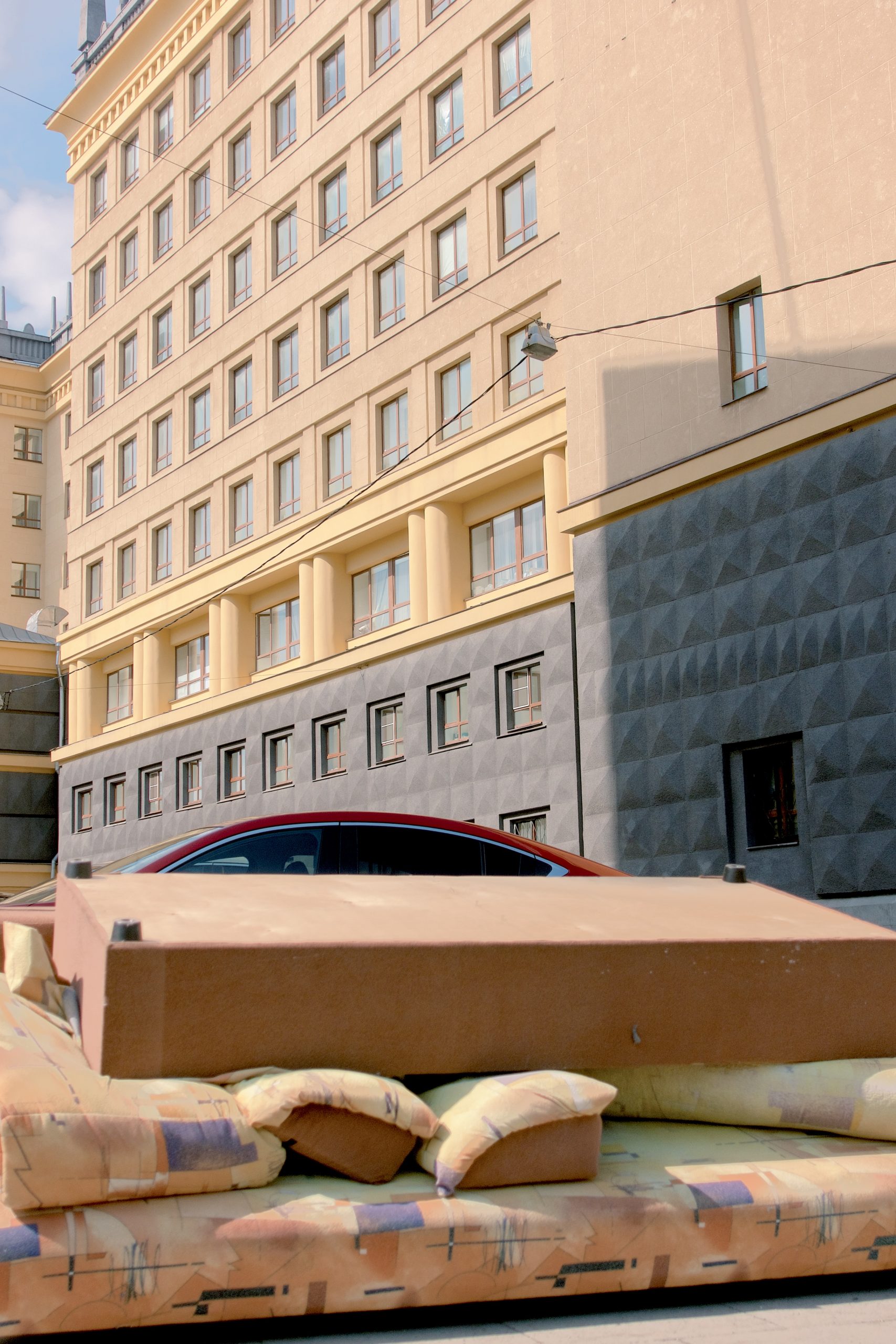
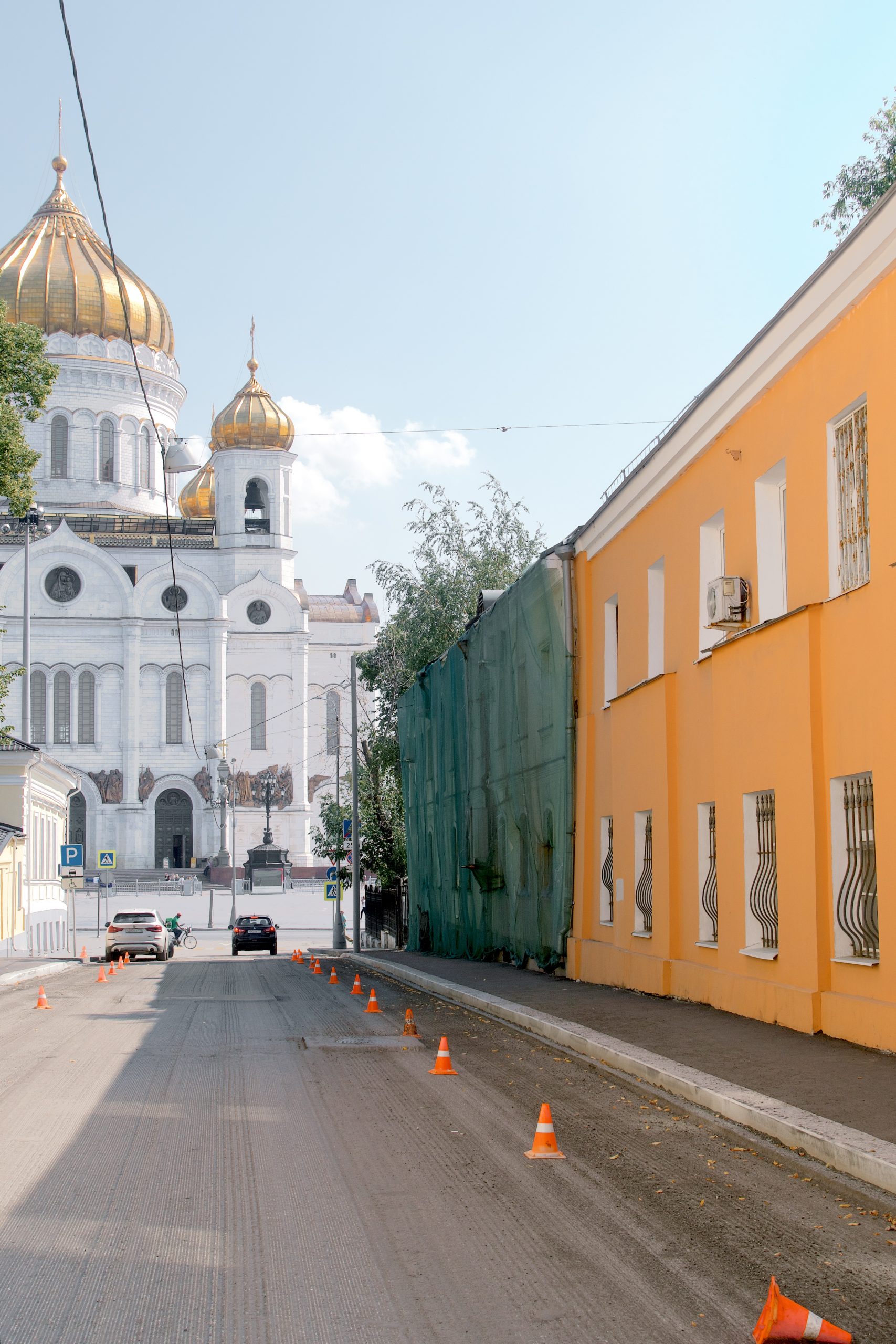
The community of urban professionals, researchers and architects I met appeared to have an above average fascination with not just cities – Russia is paradoxically one of the most highly urbanised countries – but a particular compulsion towards essentialising Moscow itself. Their local city as a vivid and evolving object of study, with its contradictory positions as both ‘global’ capital, a node floating within a hemispherical continental network of international trade, while also the capital of a nation state delineated by frosty border relationships. One avenue into decoding Russia’s international reputation as inward-facing is the now somewhat rusted 1840’s observation historian of Sergey Solovyov, that ‘the history of Russia is the history of a country that colonizes itself’.
Externally the wider reality of Russian urbanism in the 21st century doesn’t appear to stimulate as much discussion as it might. As of 2021, in part due to Brexit, both Russia and the EU now coincidentally contain 15 cities with a million inhabitants or more. Scan through list of EU cities and all the names are deeply familiar, but many Europeans (including myself prior to visiting) might struggle to name the third or fourth largest Russian cities, let alone all 15. Within the Russian list are also several cities in the midst facing apparently rapid population decline, confusingly at odds with the global trend of urbanisation and provoking questions as to what the future balance of Russia’s urban networks might be.
***
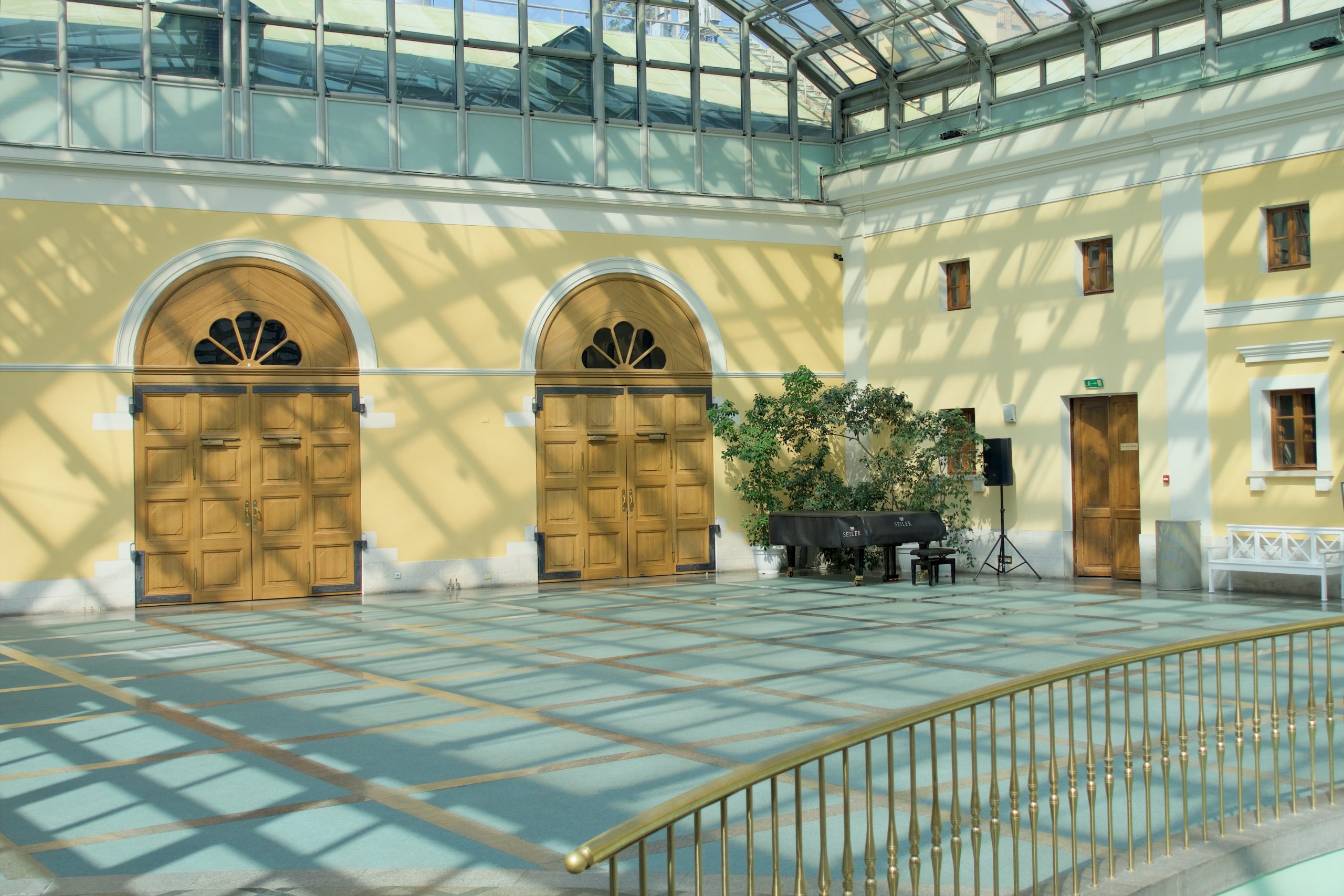
In terms of the most generic of urban metrics: density, Moscow is unusually hollow and concentric, defined by its infamous orbital rings and donuts of mass housing. You can sense of how far you are from the centre, but not necessarily in which direction. The cultural signals of gentrification are of course prickling, but they do so evenly across its surface. As a result of the relatively even quality and distribution of housing, there is no distinctly up-and-coming ‘hot’ neighbourhood and the sense of ‘where’ the city is transforming fastest is far less focused, in stark contrast, for example, to London’s postcode-resolution real estate territorialism.
The occupation or transformation of out-of-use buildings is legally challenging and rare on even a semi-permanent basis, with the winter cold necessitating at least legitimate access to centrally distributed heat. The urban fabric of Moscow has a rugged informality that is less an emergent quality as in many cities but appears to be actively generated by the municipality itself albeit perhaps not intentionally. The sheer diversity in both the design and quality of rubbish bins throughout the city being an particular mundane example.
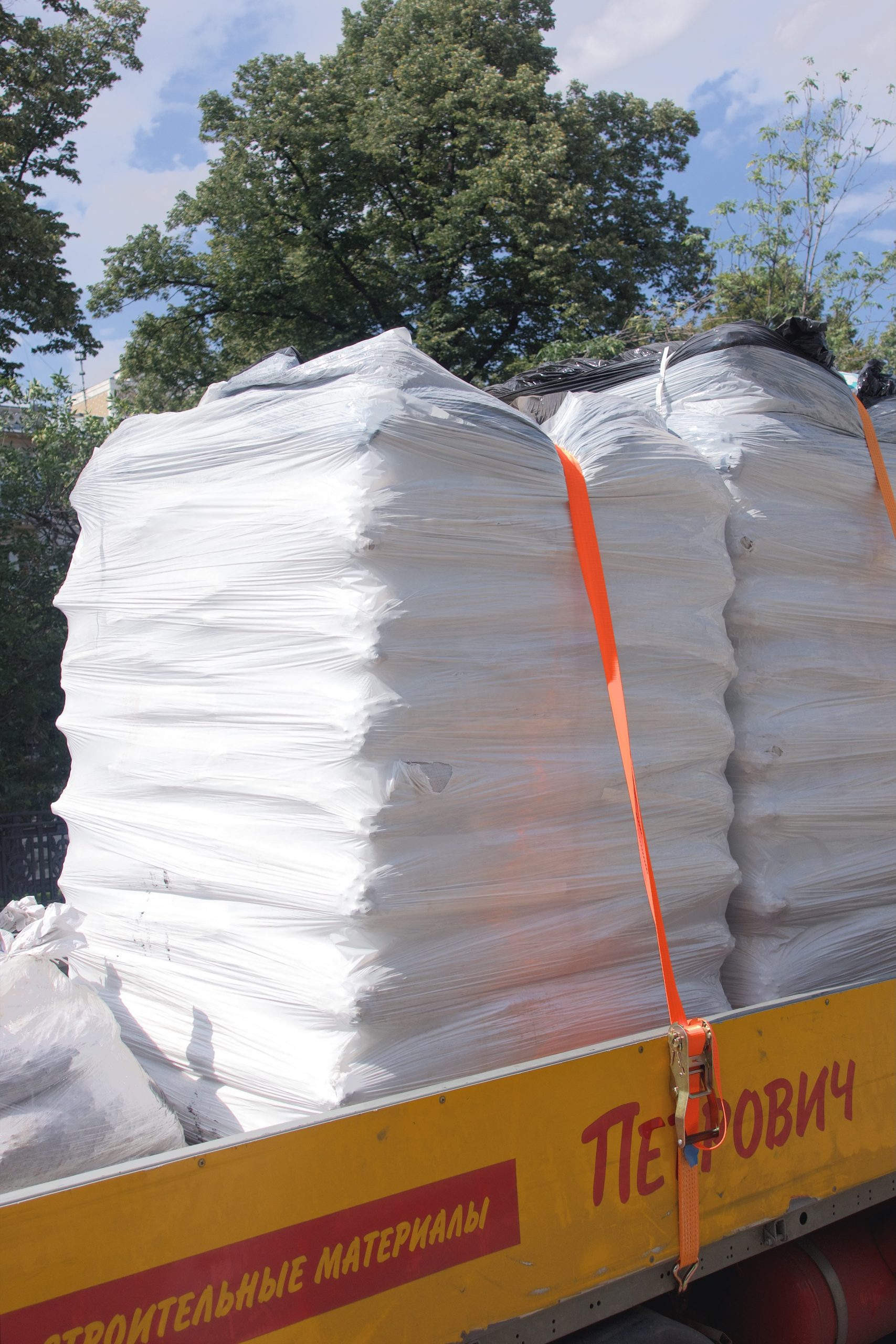
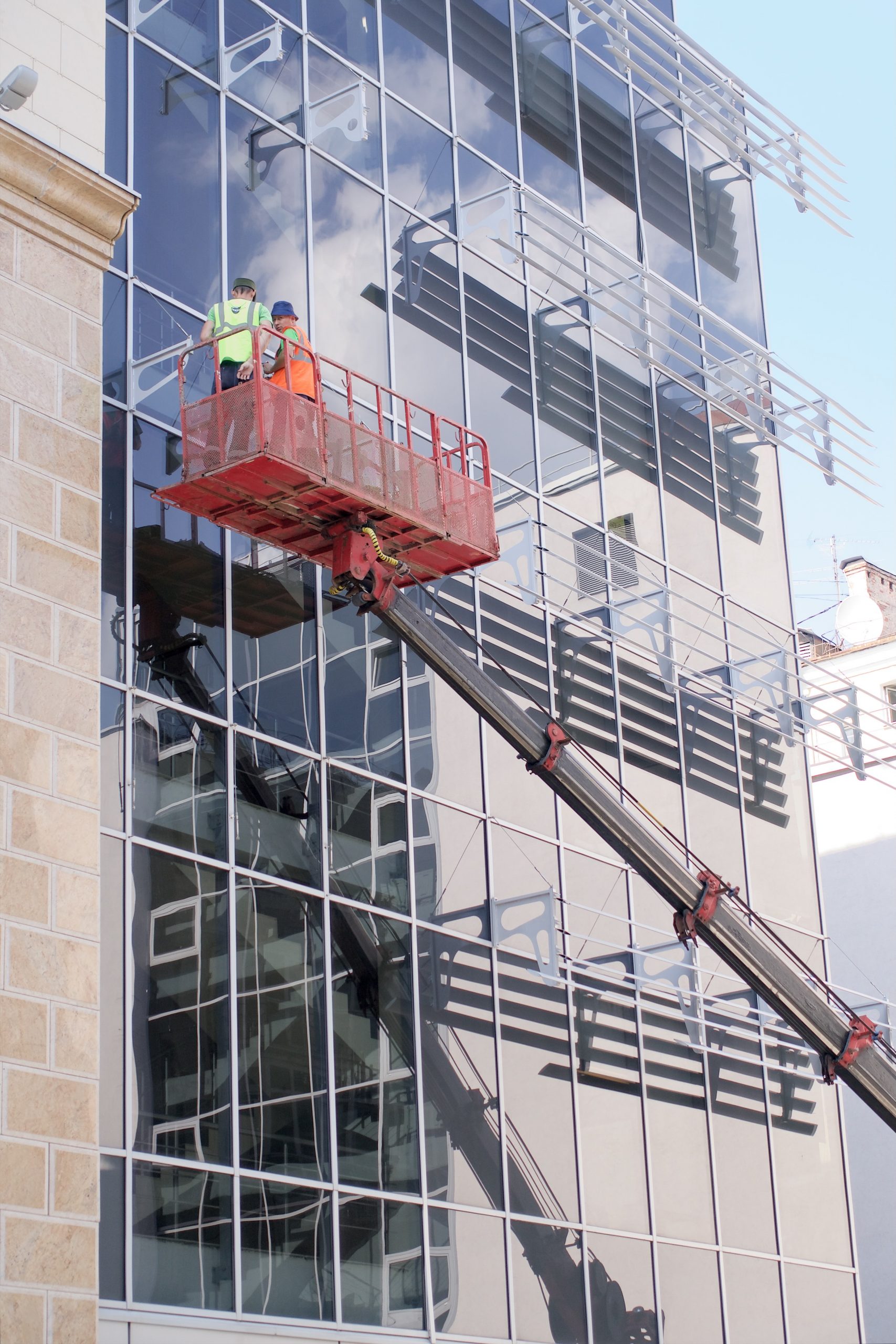
Moscow’s perennially unfinished, dramatic historical transformations and material reorganisation appear to inspire ambitious thinking in the younger generation. Its youth culture appears both extremely alert to global trends and comprehensively aloof. Club nights and ‘parties’ outside the centre, often under the constant threat of police intimidation and shutdown, ripple with a sense of dark abandon that most of the cities on the international club circuit could only parody.
***
Any prediction of Moscow’s future is like guessing the next move of an amber traffic light. Moscow is the nexus of an economy facing a brittle future and its dependency on oil and gas exports appearing ever more precarious in a world end its love affair with hydrocarbons. Its internal market still large enough to support a distinctive technology sector and an emerging service economy, albeit within the confines of a language barrier and cultural perceptions that leave Russia isolated.
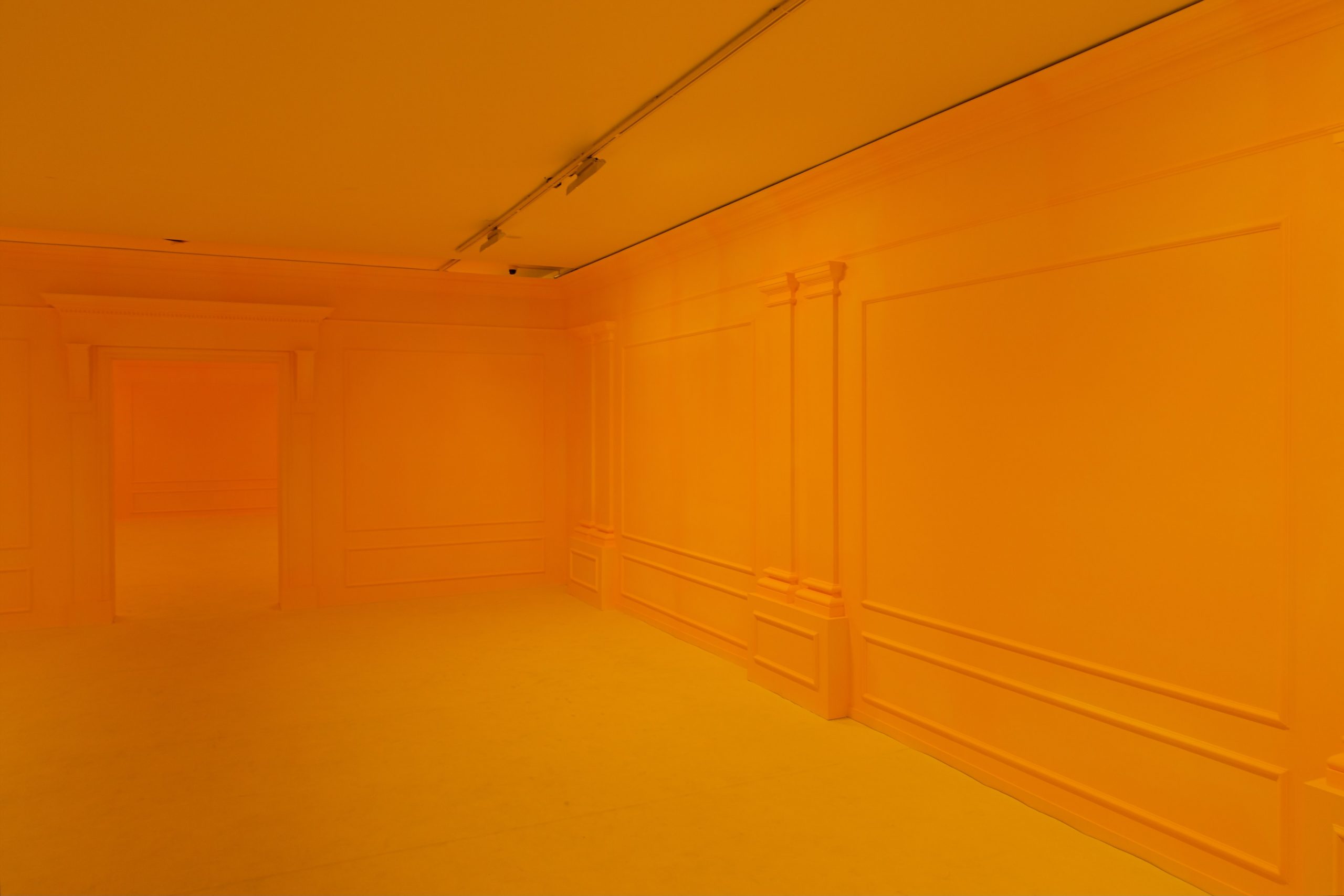
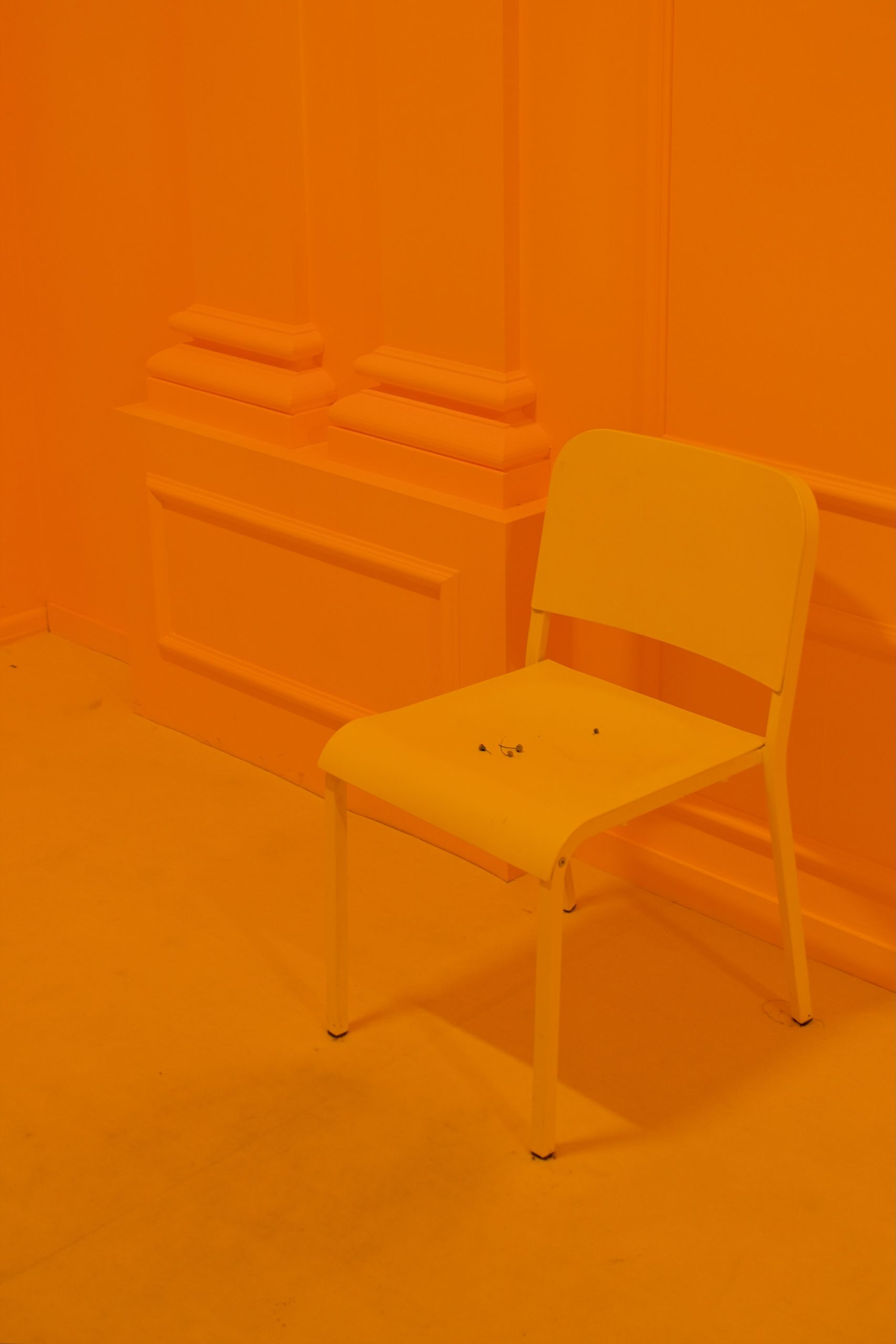
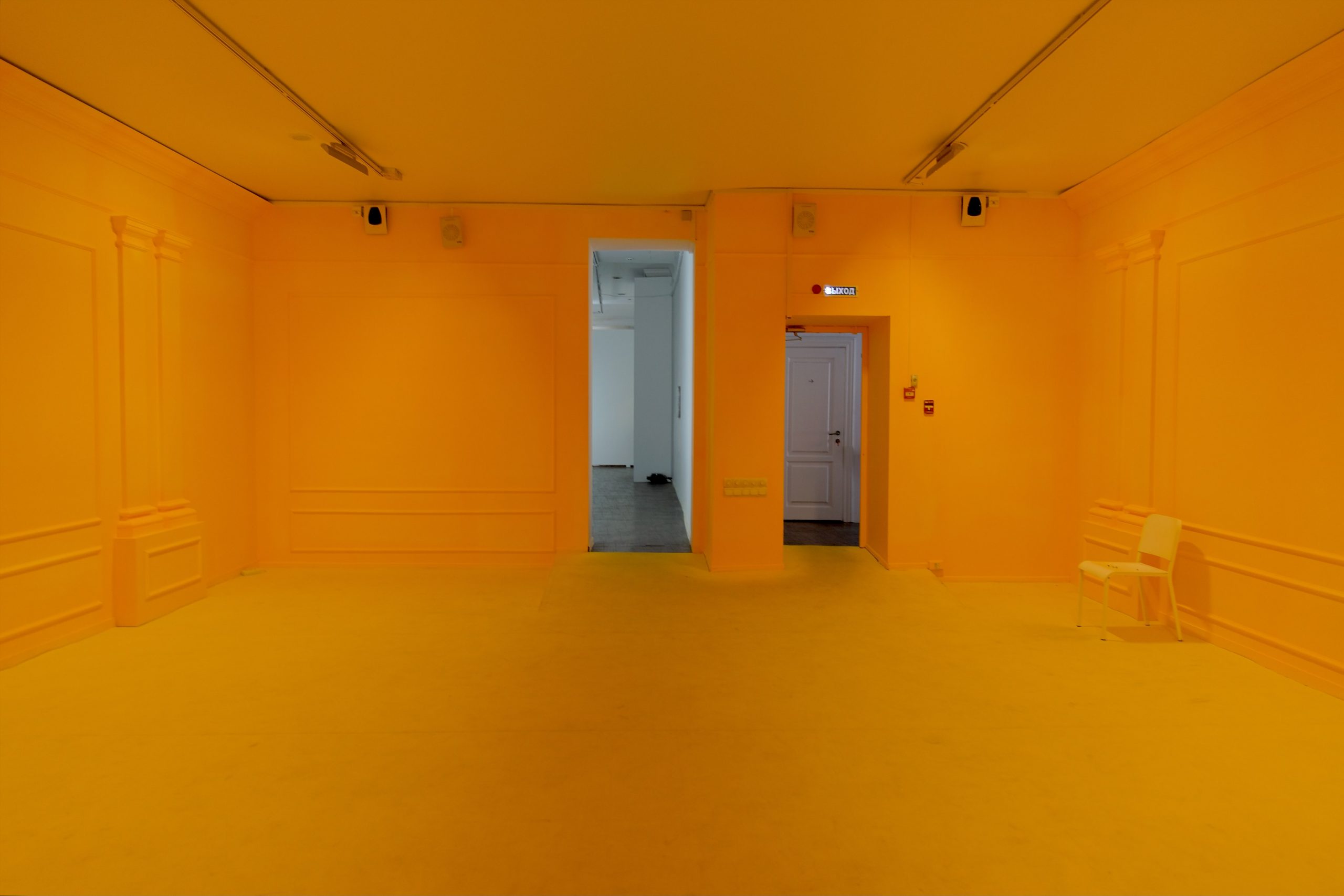
As my day walking continues I pass the Moscow Museum of Modern Art where I have a chance with Arseny Zhilyaev’s exhibition The Monotony Of The Pattern Recognizer which includes a series of agonisingly bright, empty monotone orange rooms.
***
For now though, some parts of Moscow at least are seriously gilded. Crops of fresh high-end real-estate, as slickly finished as anywhere, sprinkled with the lavishness of frequently waxed cars, apartment stores and brass fixtures. It is not uncommon to encounter entourages of security, drivers and flexed muscle signalling the power, greed and brutal inequities exacerbated by an extraction economy in a resource hungry world. A point reiterated many times to me by friends and acquaintances is that any comprehension of contemporary Russia must engage with the folk memory of the 1990’s, its food shortages and cliff edges.
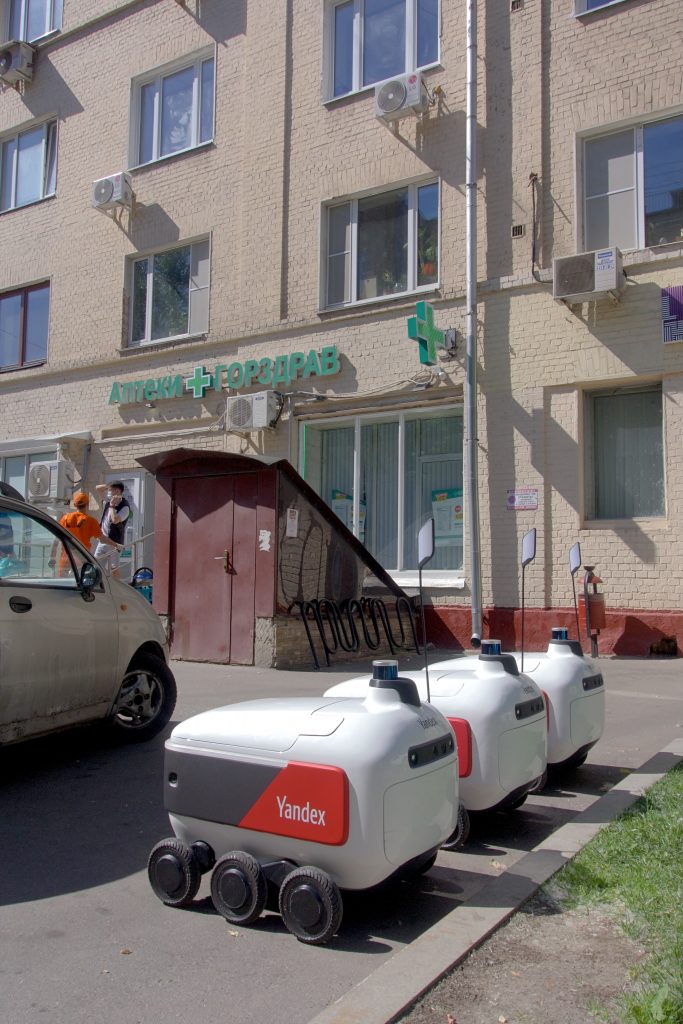
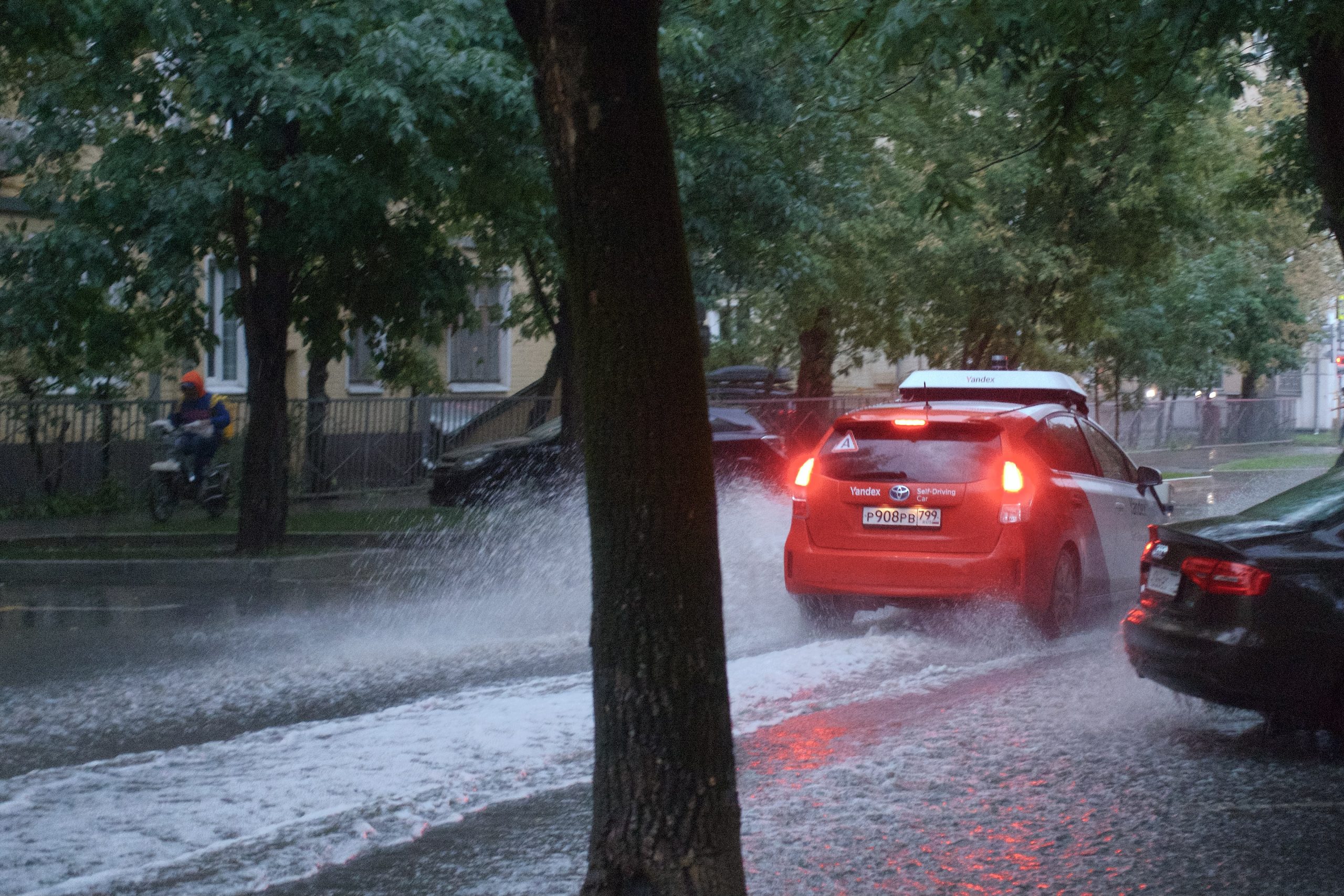
Nowhere is this legacy as stark as it in in the rapid adoption of digital services. As a city it feels alive with the agency and energy of young people looking to retool its systems, culture and cuisine. New urban technology, apps and platforms seem to be welcomed in Moscow, revealing ever more profitable niches in the services of the everyday. It hums with micro-transactions, food deliveries both robotic and human, scanned by fleets of autonomous taxis in training. The functionality of Moscows taxis is perhaps the most precise example of why.
Prior to the emergence of the ubiquitous – and arguably highly innovative – Russian tech giant Yandex and its platforms, was an infamously shoddy casino of cabs, unable to guarantee either speed, price or safety. Where platform monopolisation in other cities jars with romanticised memories of the recent past – see the taxi’s of London or New York – it is not easy to find a resident of Moscow keen to revert. It is likely, whatever transformations the continued automation and platform integration of cities might bring to their inhabitants, Moscovites maybe among the earliest global adopters.
The municipality itself appears keen to stake its claim for the world’s most integrated municipal data network, with a gargantuan and highly-polished traffic surveillance centre and major investments in everything ‘smart’. The city’s local identity appears increasingly filtered through a barrage of internationalised platform branding. The monotone, fully saturated tangerines, reds and limes of competing start-ups, stretched across uniforms, cargo bags and rentable vehicles. Urban life in Moscow like so many other places is now encoded in packaging, restaurant menus and full of new things that are new in the same way everywhere. The eerie global echo of the ‘flat white’.
The architectural writer Reyner Banham maintained that to understand Los Angeles required travelling by car, and learnt to drive before visiting. Something similar may be true of 21st century Moscow, albeit travelling by app, and observing it either through the window of a surprisingly cheap but frequently static taxi or from the deck of a surprisingly expensive but disconcertingly fast, rented micro-scooter.
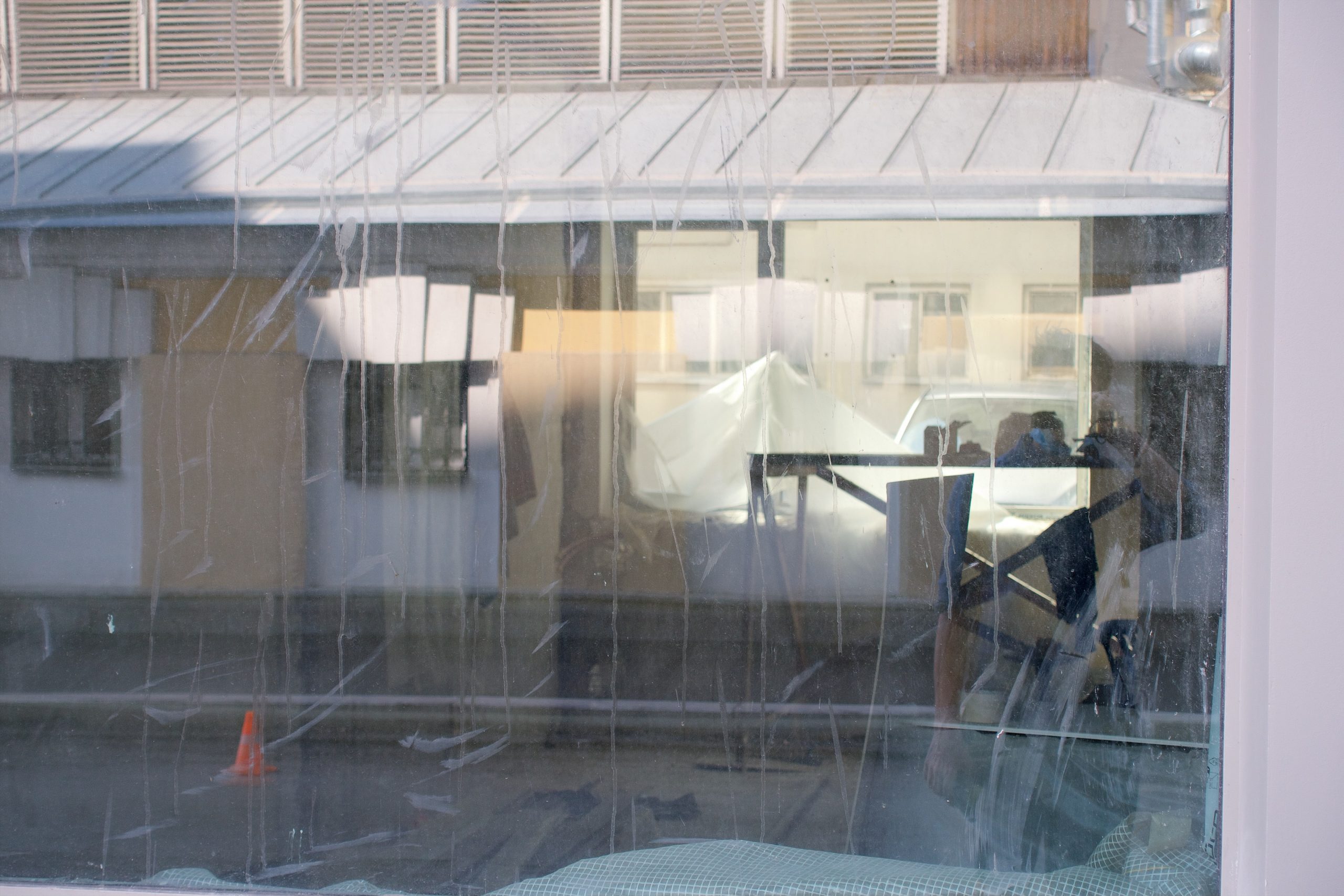
Moscow is many things, most notably living proof that history ultimately outmanoeuvres simplicity and grand theory. The lived experience, and indeed simply the every day lives of millions of people has an inertia that even the most significant of social upheavals does not fully disrupt. The day is brought to a sudden but helpfully finite end with the arrival of a wildly intense summer rainstorm. I narrowly avoid being drenched as a Yandex self-driving taxi in training, speeds through a 4-inch puddle right in front of me. Leaping to avoid the splash I miss my opportunity to see if there is a human life-guard in the drivers seat ready to grab the wheel – although there always is. I instinctively check whenever I see these vehicles in the wild though, knowing that at some point the cabin might be empty. Moscow continues another daily tangle with water.
*
For more photography follow the @rawprocessing instagram account.